Standing a few metres from a mountain gorilla in Bwindi Impenetrable Forest is one of the great wildlife encounters on Earth. Getting there is a serious road trip. Most travelers drive 8 to 10 hours from Kampala or Entebbe on roads that go from smooth tarmac to steep, muddy, hairpin murram tracks in the last stretch.
That makes your choice of car for gorilla trekking safari one of the biggest decisions you’ll make. The wrong vehicle can mean a bumpy, stressful journey, a missed trekking briefing, or a car stuck in the mud on a Nkuringo hillside. The right one makes the trip comfortable, safe and a lot more enjoyable.
This guide compares the vehicles most travelers consider in Uganda:
- Toyota RAV4
- Land Cruiser with pop-up roof (the classic safari vehicle)
- Land Cruiser with rooftop tent (for self-drive camping)
- Land Cruiser Prado
- Safari van (Toyota Hiace)
By the end you’ll know which one fits your group size, budget, season and itinerary.
Quick Answer: Which Car Is Best for Gorilla Trekking?
| Your situation | Best choice |
|---|---|
| Couple or solo traveler, budget-conscious, mostly paved routes | RAV4 |
| Comfort-focused couple or small family, gorillas plus other parks | Land Cruiser Prado |
| Gorillas plus savanna parks (Queen Elizabeth, Murchison Falls), photography | Pop-up roof Land Cruiser |
| Adventurous self-drivers who want to camp | Rooftop tent Land Cruiser |
| Groups of 6 to 9, lowest cost per person | Safari van |
| Rainy season (March to May, October to November) or remote sectors like Nkuringo and Ruhija | Any Land Cruiser |
If you want one recommendation for most travelers, it is a Land Cruiser. Gorilla country is hilly, wet and unpredictable, and the Land Cruiser is built for it.
What Driving to Gorilla Country Is Really Like
Before comparing vehicles, it helps to understand the terrain. Gorillas live in two parks in Uganda’s southwest: Bwindi Impenetrable National Park and Mgahinga Gorilla National Park. Bwindi has four trekking sectors, each with different road conditions:
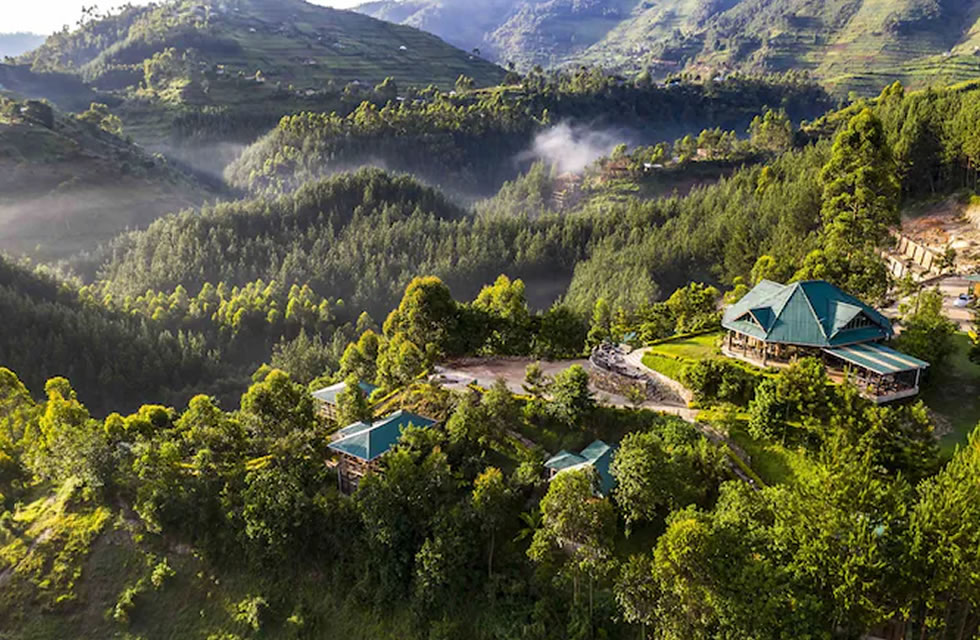
- Buhoma (north): The most established sector, with generally better access, though still hilly.
- Ruhija (east): High-altitude, remote and often muddy, with rugged roads.
- Rushaga (south): Reached via Kabale, with many gorilla families and winding, hilly approaches.
- Nkuringo (south-west): Famous for steep, narrow roads and dramatic views. This is where vehicle choice matters most.
- Mgahinga: Accessed from Kisoro, with mixed road quality.
Road quality is improving and changes with the seasons, so ask about current conditions before you finalize your plans. A few things are constant:
- The main routes from Kampala (via Masaka, Mbarara, Kabale or Kisoro) are largely paved. The last leg to the trailhead is often not.
- Southwest Uganda gets heavy rain, especially March to May and October to November. Wet murram roads turn slick very quickly.
- Gorilla trekking briefings usually start early in the morning, so you want to sleep close to your trailhead. That often means arriving the evening before over challenging roads.
A good car for gorilla trekking safari needs three things: ground clearance, traction, and comfort over long distances. Let’s see how each option performs.
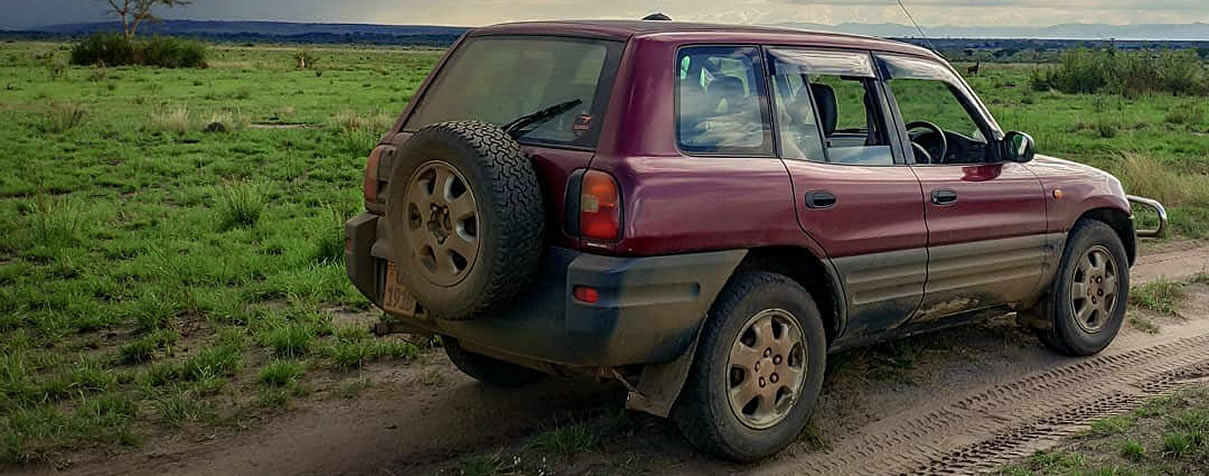
1. Toyota RAV4: The Budget-Friendly Option
Who it suits
Couples, solo travelers and small groups (2 to 3 people) on a tighter budget who are sticking to main roads and lodges with decent access.
Pros
- Lower rental cost than any Land Cruiser.
- Better fuel economy (typically around 10 to 12 km per litre, depending on model and driving).
- Easy to drive, especially for self-drivers used to regular cars.
- Comfortable on tarmac, which covers most of the journey.
- Easier to park in busy towns like Kabale, Kisoro and Mbarara.
Cons
- Lower ground clearance than a Land Cruiser (roughly 19 to 20 cm, varying by model year). Deep ruts and rocky stretches can be a problem.
- Less capable in heavy rain on steep, muddy murram roads.
- Limited luggage space. Two large suitcases plus hiking gear fill it quickly.
- No viewing roof. Wildlife viewing is through the windows only.
- Not the safest bet for Nkuringo or Ruhija during the wet season.
Verdict
The RAV4 is a sensible, affordable choice for a dry-season trip focused on Buhoma or Kisoro/Mgahinga, with a driver-guide who knows the roads. It is not the best car for gorilla trekking safari if you’re heading to remote sectors in the rains or want to combine gorillas with savanna game drives.
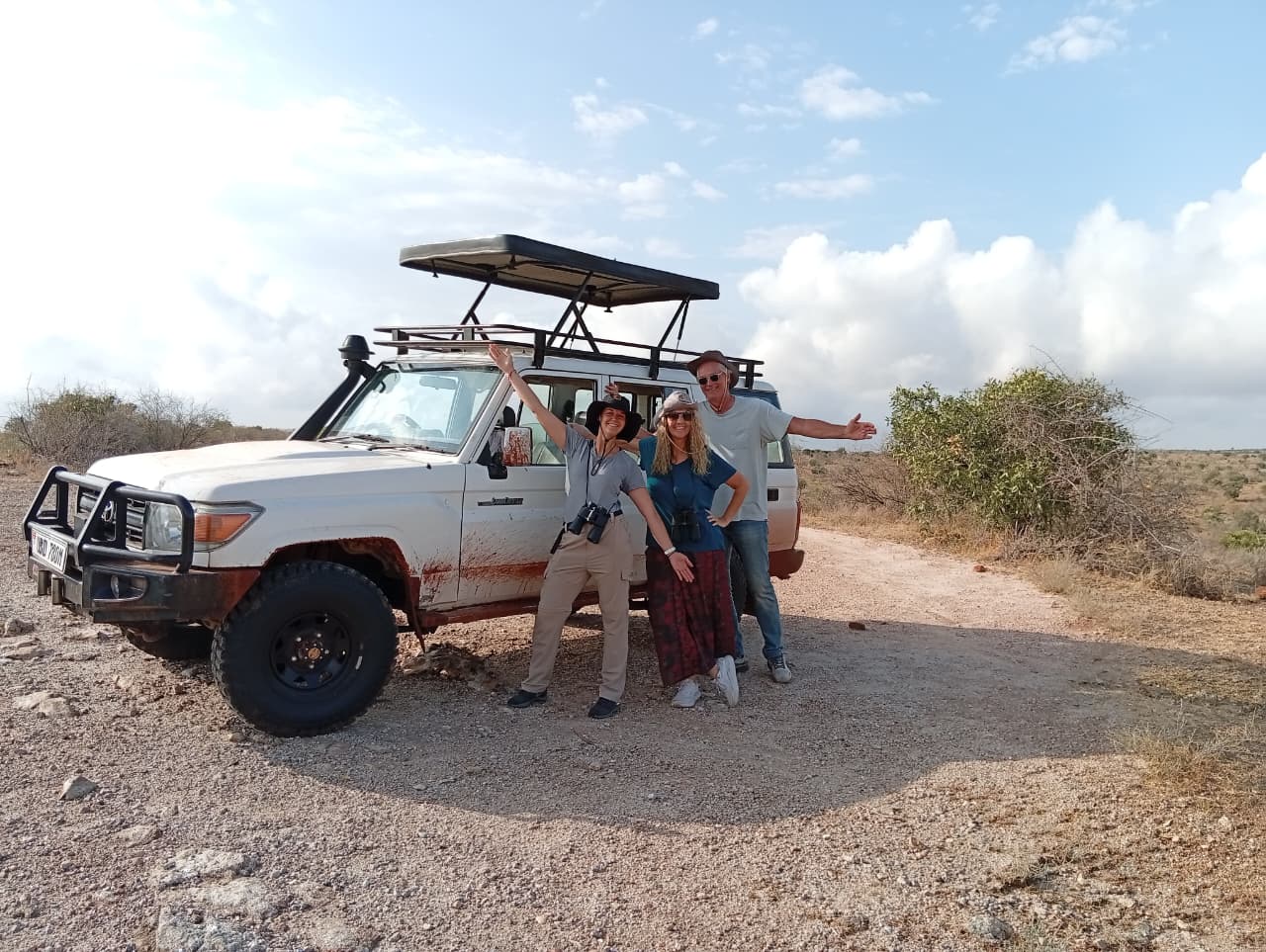
2. Land Cruiser with Pop-Up Roof: The Classic Safari Vehicle
Who it suits
Travelers combining gorilla trekking with wildlife parks like Queen Elizabeth National Park (home of the tree-climbing lions of Ishasha), Murchison Falls or Lake Mburo, plus photographers and families.
Pros
- Excellent ground clearance and 4×4 capability (typically around 22 to 23 cm). It handles mud, steep hills and rough murram with confidence.
- Pop-up roof for standing game viewing and unobstructed photography.
- Guaranteed window seats in most safari configurations.
- Built for long-distance African roads, with a strong suspension and a reputation for reliability.
- Room for luggage, cool box and gear in most safari layouts.
- Usually comes with an experienced driver-guide, which many travelers prefer on the Bwindi routes.
Cons
- Higher rental cost than a RAV4 or van.
- Heavier fuel consumption (often around 6 to 8 km per litre for diesel models).
- Slower on tarmac and firmer over bumps compared with a modern SUV.
Verdict
For most travelers, a pop-up roof Land Cruiser is the best all-round car for gorilla trekking safari. A note on the roof: you won’t use it while trekking, because the gorillas are reached on foot. It earns its place on the parts of your trip that include savanna parks, so if your itinerary is gorillas only, the roof matters less than the 4×4 capability.
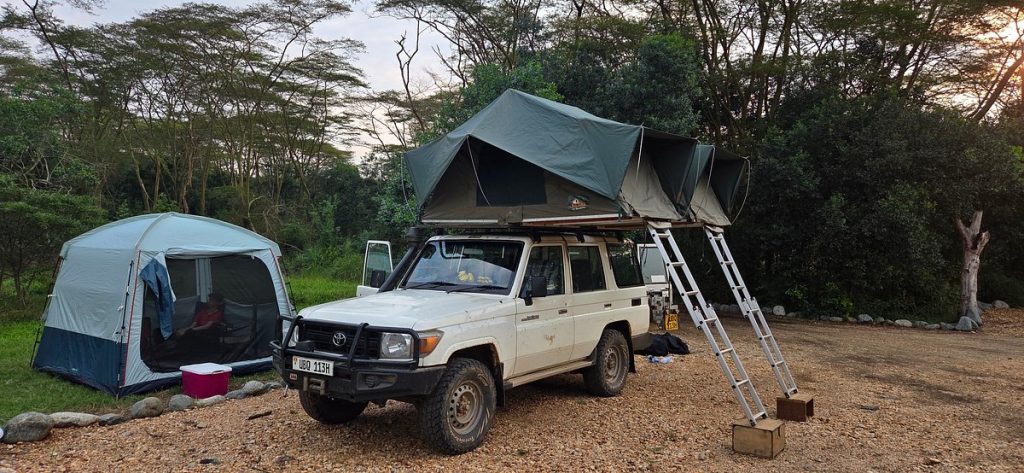
3. Land Cruiser with Rooftop Tent: For Self-Drive Camping Adventures
Who it suits
Adventurous travelers, couples and small groups who want freedom, flexibility and a budget-friendly accommodation solution. Overlanders and repeat visitors to Africa are the typical fit.
Pros
- Total flexibility. Set your own pace and stay where you like.
- Accommodation built into the vehicle. A rooftop tent sets up in minutes and keeps you off the ground.
- Camping gear is typically included in a rental (tent, mattress, camp kitchen and so on, depending on the package).
- Lower overall trip cost if you camp instead of booking lodges every night.
- Full 4×4 capability for rough and remote roads.
Cons
- Camping options near gorilla trailheads are limited. Most travelers combine camping with a few nights in lodges, especially before a trek day, to be rested and close to the briefing point.
- Self-drive requires confidence on Uganda’s roads, including left-side driving, unmarked speed bumps, boda-bodas and livestock.
- Setup and pack-down takes time, and mountain weather can be cold and wet.
- You’re responsible for the vehicle, including navigation, breakdowns and safety.
- Avoid driving at night. Poor lighting and unpredictable hazards make it risky.
Self-drive essentials
- A valid driving licence (and an International Driving Permit if required for your licence).
- Passport or ID, and the rental deposit.
- Comprehensive insurance and roadside assistance details.
- Offline maps, a physical map and extra fuel in remote areas.
- A plan to reach your gorilla briefing point early, with buffer time for road delays.
Verdict
A rooftop tent Land Cruiser is a fantastic option for confident, adventurous self-drivers. If you’ve never driven in East Africa, consider hiring a driver-guide for the mountain roads, or at least the Bwindi leg, and enjoy the camping freedom elsewhere.
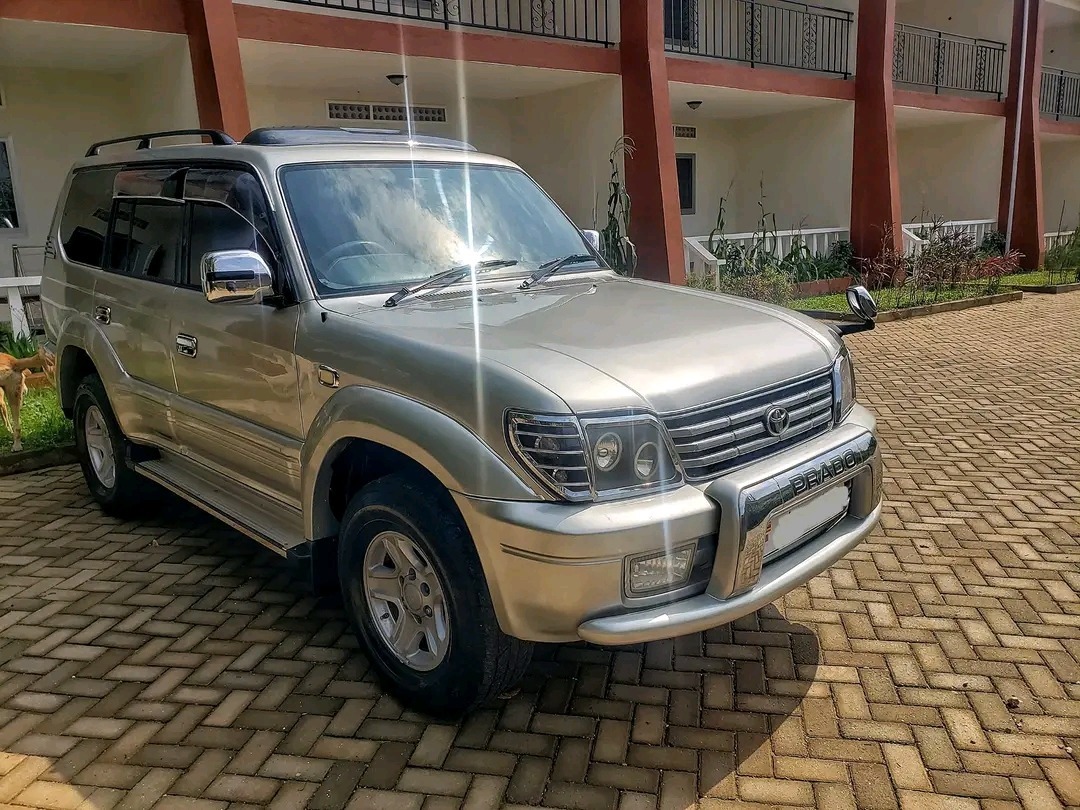
4. Land Cruiser Prado: Comfort Meets Capability
Who it suits
Couples and small families (up to 4 to 5 people) who want SUV comfort with real off-road ability, plus travelers who value a smoother ride and air-conditioned interiors on long drives.
Pros
- Comfortable, car-like ride with good ground clearance and 4×4 capability.
- Strong performance on mixed roads, from tarmac to muddy murram.
- Modern interiors with better air conditioning, seating and features than classic safari cruisers.
- Good for self-drivers who want a capable but familiar-feeling vehicle.
- A step up from the RAV4 on mountain roads and in the rain.
Cons
- No pop-up roof in most standard versions, so game viewing is through windows.
- Less luggage space than a safari Land Cruiser in some configurations.
- Costs more than a RAV4 and often less than a specialized safari cruiser, though prices vary by fleet.
Verdict
The Prado is a strong middle ground: more capable than a RAV4 and more comfortable than a classic safari Land Cruiser. If you’re a small group prioritizing comfort on the road to Bwindi, it’s a smart choice.
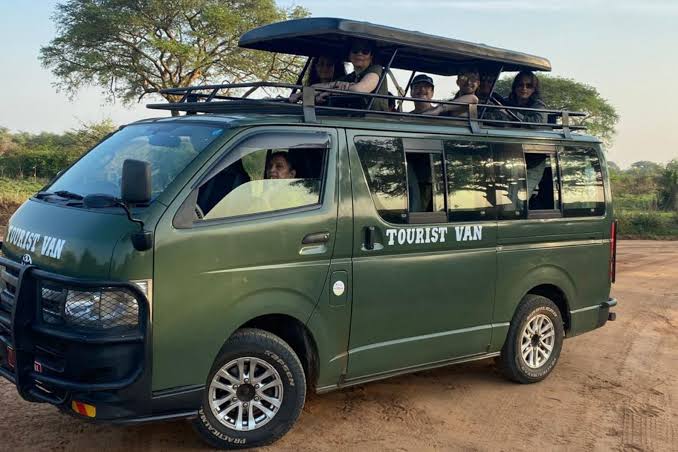
5. Safari Van (Toyota Hiace): The Group Travel Workhorse
Who it suits
Larger groups (6 to 9 passengers), families, church and school groups, and travelers watching the cost per person.
Pros
- Lowest cost per person when the vehicle is full.
- Spacious seating for larger groups, with room for luggage.
- Many vans have pop-up roofs for game viewing.
- Fuel-efficient for its size, generally better than a big V8 Land Cruiser.
- Comfortable for long tarmac stretches.
Cons
- Lower ground clearance (typically around 17 to 18 cm), and it’s generally not a 4×4.
- Struggles on steep, wet, muddy roads. It’s a risk on Nkuringo and Ruhija in the rains.
- Softer suspension means a bumpier ride on rough tracks.
- Fewer “adventure” options for camping and self-drive.
Verdict
A safari van is excellent for groups sticking mainly to paved roads and more accessible sectors, especially in the dry season. If your party is heading to Nkuringo or Ruhija in wet months, a 4×4 is the safer choice, even at higher cost.
Side-by-Side Comparison
| Feature | RAV4 | Pop-Up Land Cruiser | Rooftop Tent Land Cruiser | Prado | Safari Van |
|---|---|---|---|---|---|
| Typical passengers | 2 to 3 | 4 to 6 | 2 to 4 | 3 to 5 | 6 to 9 |
| 4×4 / off-road | Limited | Excellent | Excellent | Very good | Limited |
| Ground clearance (approx.) | 19 to 20 cm | 22 to 23 cm | 22 to 23 cm | 22 cm | 17 to 18 cm |
| Rainy-season confidence | Low to moderate | High | High | High | Low |
| Game-viewing roof | No | Yes | No | No | Often |
| Luggage space | Limited | Good | Good (with gear) | Moderate | Good |
| Fuel economy | Best | Heavy | Heavy | Moderate | Good |
| Comfort on long drives | Very good | Good | Good | Very good | Good |
| Best for | Budget couples | All-round safari | Self-drive camping | Comfort and capability | Groups |
Ground clearance and fuel figures are approximate and vary by model, year and load.
How to Choose the Right Car for Gorilla Trekking Safari
1. Check your trailhead. Nkuringo and Ruhija demand a 4×4. Buhoma and Mgahinga are more forgiving. Ask which sector your gorilla permit is for before you choose a vehicle.
2. Consider the season. In the dry months (roughly June to August and December to February), a wider range of vehicles can manage. In the wet months, choose a Land Cruiser or Prado.
3. Count your people and bags. Gorilla trips involve hiking boots, rain gear, daypacks and often big suitcases. Underestimating luggage is a classic mistake.
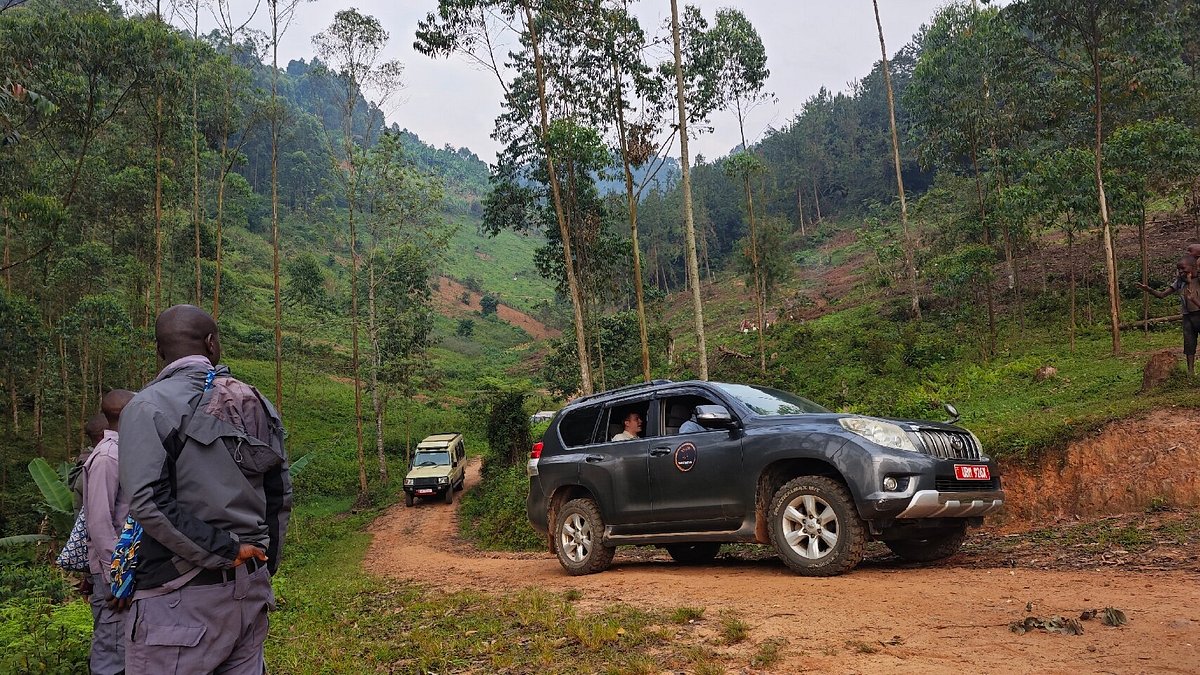
4. Decide on driver-guide vs self-drive. Many travelers hire a driver-guide for the gorilla leg. Local drivers know the roads, the best stops and the current conditions, and you can relax and enjoy the scenery.
5. Decide what else you’re seeing. If you’re adding Queen Elizabeth or Murchison Falls, a pop-up roof is a big win. If you’re doing only gorillas, prioritize 4×4 capability and comfort.
6. Build in buffer time. Whatever you drive, aim to arrive the day before your trek. Mountain roads can be slower than the map suggests.
Tips for a Smooth Drive to Bwindi
- Book your gorilla permit early. Permits are limited and date-specific, so plan your vehicle around your confirmed date. Check the current Uganda Wildlife Authority tariff before you budget.
- Start early each day and avoid driving after dark.
- Carry cash for fuel, snacks and small purchases in rural areas.
- Fill up in larger towns like Mbarara, Kabale and Kisoro.
- Ask about tyre condition and a spare before you leave.
- Pack for rain and cold, even in the dry season. The mountains can be chilly.
- Confirm your vehicle’s inclusions: mileage limits, insurance, driver accommodation and fuel policy.
Frequently Asked Questions
What is the best car for gorilla trekking safari in Uganda?
For most travelers, a Land Cruiser (pop-up roof safari version or Prado) is the best choice thanks to its ground clearance, 4×4 traction and comfort on Uganda’s mountain roads. A RAV4 works on a tighter budget in the dry season, and a safari van suits larger groups.
Can a RAV4 go to Bwindi?
Yes, a RAV4 can reach parts of Bwindi, especially in the dry season and on the more accessible routes. It has lower clearance and less traction than a Land Cruiser, so it’s a weaker choice for Nkuringo, Ruhija or wet-season travel.
Do I need a 4×4 for gorilla trekking in Uganda?
A 4×4 is strongly recommended. It isn’t always mandatory, but the final approach roads in Bwindi and Mgahinga can be steep, muddy and rough. A 4×4 adds safety, confidence and flexibility.
Is a safari van good for gorilla trekking?
A safari van is a great budget option for groups on mostly paved routes and easier sectors in the dry season. It’s less suited to steep, muddy tracks because of its lower clearance and lack of 4×4.
Is self-drive safe in Uganda?
Many visitors self-drive successfully, but it requires confidence. Expect left-side driving, heavy trucks, boda-bodas, potholes and animals on the road. If you’re new to driving in Africa, consider a driver-guide, at least for the gorilla leg.
Can I camp near Bwindi with a rooftop tent?
There are campsites and lodge campgrounds around the Bwindi sectors, but availability varies. Many travelers mix camping with a few lodge nights close to their trailhead so they’re rested and on time for the morning briefing. Confirm campsite availability in advance.
Do I need a pop-up roof for gorilla trekking?
Not for the gorillas themselves, since you trek on foot. A pop-up roof is valuable if you’re adding savanna parks such as Queen Elizabeth, Murchison Falls or Lake Mburo.
How long is the drive from Kampala to Bwindi?
Typically around 8 to 10 hours, depending on the sector, traffic and road conditions. Many travelers break the journey with a stop or an overnight en route.
Which Car for Gorilla Trekking Safari Should You Choose?
- Best all-rounder: Pop-up roof Land Cruiser
- Best for comfort and capability: Land Cruiser Prado
- Best for adventurous self-drivers: Rooftop tent Land Cruiser
- Best on a budget: RAV4 (dry season, accessible sectors)
- Best for large groups: Safari van (paved routes, dry season)
Whichever you choose, book it early, confirm your trailhead and pick a vehicle that gives you a buffer for Uganda’s unpredictable mountain roads. The gorillas are worth every kilometer.
Ready to book? Contact Uganda Car Rental Deal for a tailored quote on a RAV4, Land Cruiser, Prado or safari van, with or without a driver-guide, for your gorilla trekking safari. Alternatively you can email directly to info@ugandacarrentaldeal.com or call/chat with reservations on +256-779232316.