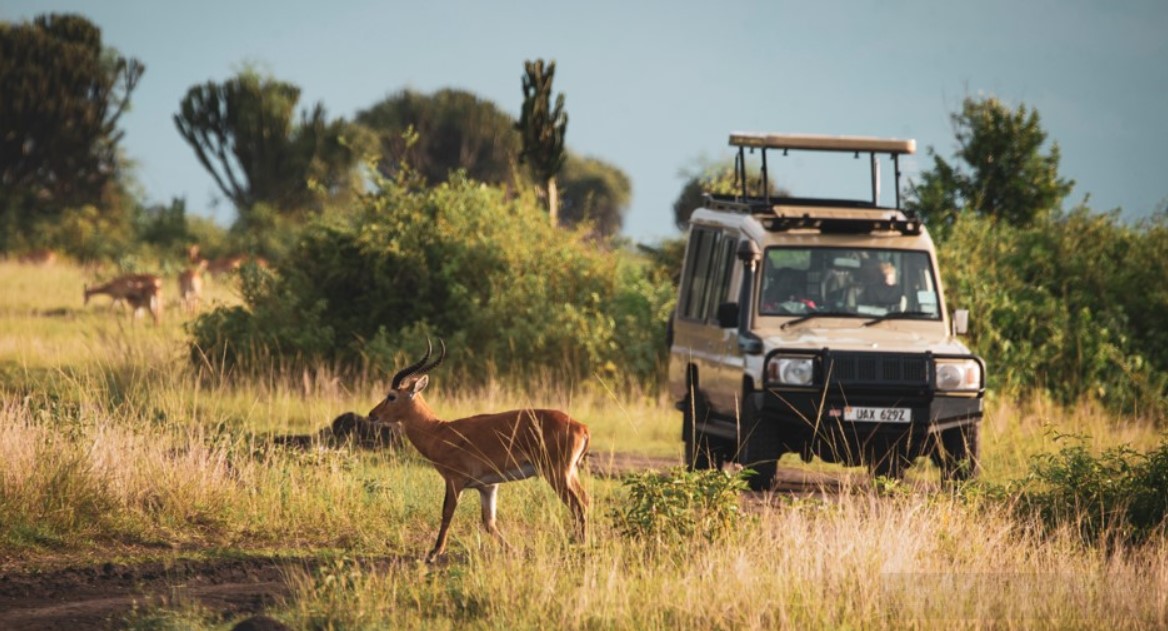
Queen Elizabeth National Park (QENP) is Uganda’s most visited savanna park, and it’s also the country’s most self-drive-friendly one. Unlike Bwindi or the deep interior of Kidepo, QENP sits on a network of roads that range from smooth tarmac to graded murram tracks, and its game-viewing circuits are well signposted and largely manageable in an ordinary SUV. That said, “self-drive-friendly” doesn’t mean “identical to driving at home” — you still need the right vehicle, a realistic sense of the distances involved, and a plan for fuel, fees, and the occasional pothole or mud patch. This guide covers everything a self-driver needs: which car to rent in Uganda, which route to take from Kampala or Entebbe, what the roads are actually like once you’re inside the park, and how to budget your time and money.
Why Self-Drive Queen Elizabeth?
QENP rewards independence. The park’s main draws — the Kasenyi plains for lion and kob, the Kazinga Channel for hippo and buffalo, the Ishasha sector for tree-climbing lions, and the Mweya Peninsula for sweeping views over the channel — are spread across a large area, and having your own vehicle means you can linger at a sighting, change plans if the weather turns, or head out for an early or late game drive without waiting on a shared itinerary. It’s also considerably cheaper than a fully guided package once you factor in vehicle hire versus a driver-guide’s daily rate, especially for groups of three or four splitting a rental.
The trade-off is that you’re responsible for navigation, vehicle troubleshooting, and reading the terrain yourself — none of which are hard in QENP, but all of which deserve some preparation.
What Kind of Car Do You Need?
The route running through Ishaka and Rubirizi into the park is nearly completely paved, and the main approach roads from Kampala have seen major upgrades. That has led some guides to suggest a standard 2WD saloon can manage the trip in dry weather. In practice, most experienced self-drivers and rental operators still recommend a 4×4, and for good reason:
- Inside the park, many of the game-drive tracks — particularly around Kasenyi, Ishasha, and the tracks branching off toward Maramagambo Forest — are ungraded murram or dirt. They’re fine when dry but turn slick and rutted after rain.
- Ground clearance matters for the crater-pocked sections of track and for fording the occasional water-logged dip, especially in the Ishasha sector, which sees less grading than the main park roads. A 4×4 is strongly recommended for comfort, safety, and wildlife-viewing flexibility, especially between March–May and September–November, Uganda’s two rainy seasons.
- A 4×4 also sits higher, which simply makes for better game viewing over the long grass on the Kasenyi plains.
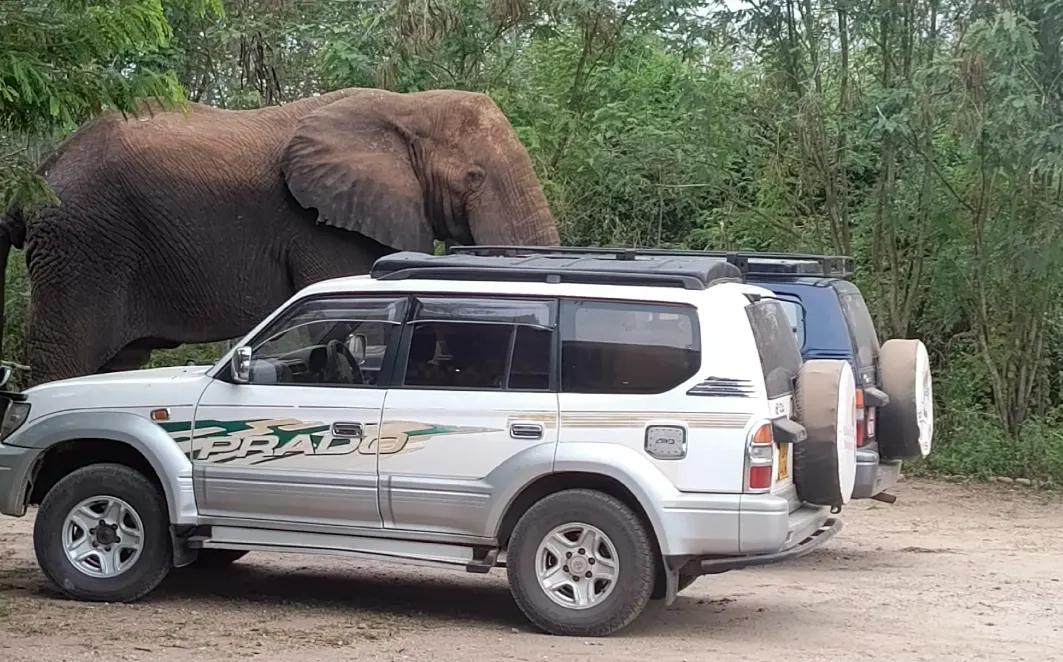
Recommendation: a mid-size 4×4 with high clearance — a Toyota RAV4, Land Cruiser Prado, or Toyota Hilux double cab are the most commonly rented options in Uganda, all widely available from Kampala- and Entebbe-based rental agencies with unlimited-mileage self-drive packages. A 2WD saloon can work for a dry-season trip that sticks strictly to the tarmac approach roads and skips the rougher internal tracks, but it limits where you can go once inside the park and adds risk if the weather changes.
Whatever you rent, check before you leave Kampala:
- A full-size spare tyre (ideally two, if heading to Ishasha) plus a working jack and wheel spanner
- A jerrycan of extra fuel — fuel stations thin out west of Mbarara and Kasese
- Recovery gear (tow rope) if venturing beyond the main tracks
- 4×4 low-range actually functions, not just badge-deep
Getting There: The Two Main Routes from Kampala
From Kampala, the park can be approached from the south via Mbarara (420km) or the north passing through Fort Portal (410km). Both are roughly the same distance and driving time, and each has a different character.
Route 1: The Southern Route via Mbarara (Direct, Mostly Tarmac)
Kampala → Masaka → Mbarara → Bushenyi → Kabatoro/Katunguru Gate
This is the most direct and most heavily used route into the park, and it’s the one most self-drive itineraries default to. It is the direct route via Mbarara, as opposed to the longer but visually rewarding path through Fort Portal. Key notes:
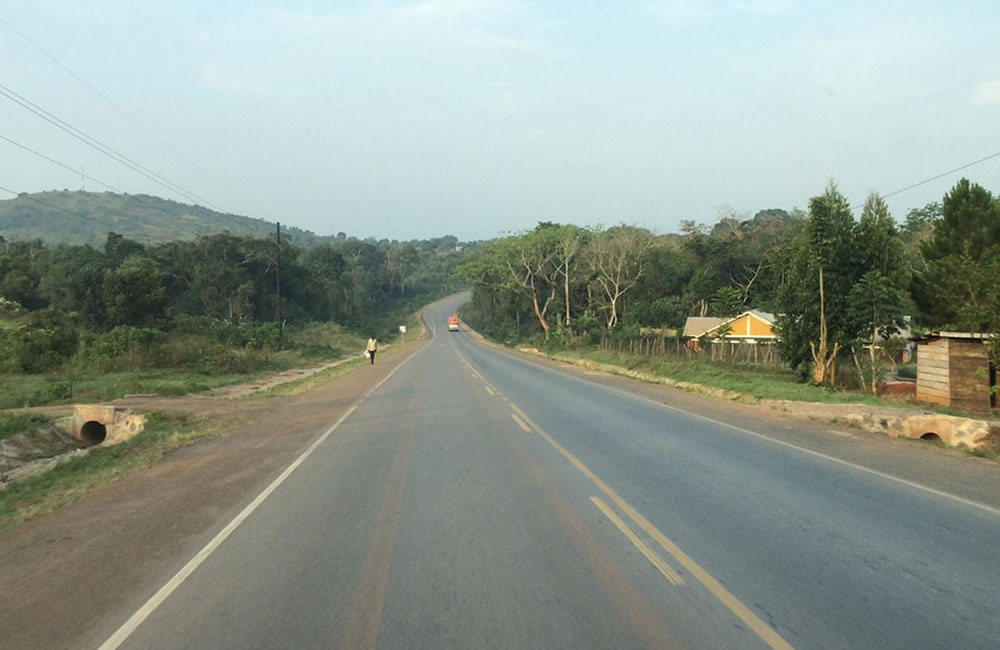
- The road is tarmac almost the entire way, with the surface generally in good condition from Kampala to Bushenyi.
- Fuel up in Mbarara before continuing — it’s the last major town with reliable, competitively priced fuel stations before the park.
- Expect the final stretch from Bushenyi/Kasese-side turnoffs into the park gates to include a mix of tarmac and murram.
- This route also lets you detour to Lake Mburo National Park, a good stopover roughly two-thirds of the way, if you want to break the drive into two days.
Route 2: The Northern/Western Route via Fort Portal (Scenic, via the Rwenzoris)
Kampala → Mubende → Fort Portal → Kasese → Mweya/Kazinga area
This route trades a little extra time for scenery — it offers panoramic views of the majestic Rwenzori Mountains along the way. It’s the better choice if you’re combining QENP with Kibale National Park (chimpanzee tracking) or Semuliki National Park, both of which sit along this corridor. The Mubende–Fort Portal–Kasese corridor is tarmac-connected and takes roughly 5–6 hours from Kampala depending on weather and traffic, similar timing to the Mbarara route.
Route 3: The Ishasha Approach (Combining with Bwindi/Gorilla Trekking)
If your itinerary includes Bwindi Impenetrable Forest for gorilla trekking, you’ll likely enter QENP from the south through the Ishasha sector, home of the park’s famous tree-climbing lions. This route is recommended because it allows for the least amount of backtracking, though it does require much more rough-road driving than the other, nearly completely paved, option through Ishaka and Rubirizi. If you’re coming this way, budget extra time — the Ishasha roads are the least improved in the park and slow going is normal, particularly after rain.
Combining Both Routes into a Loop
Because the Mbarara and Fort Portal routes both connect Kampala to the park, they can be combined into a circuit with short detours to Lake Mburo, Semuliki, and Kibale — driving in via one and out via the other rather than backtracking. This is a popular structure for 7–10 day self-drive itineraries that stitch together Uganda’s western parks.
Road Conditions: What to Actually Expect
Don’t take “paved” or “good roads” claims from marketing pages at face value — real trip reports are more useful:
- Driving into the park itself, the road is mainly fine with the occasional pothole, and while the majority of roads are in good condition, you should factor in traffic — especially getting out of Kampala — and the odd patch of roadworks.
- Expect the first hour or two out of Kampala to be the slowest part of the whole trip, thanks to city and peri-urban traffic, not the rural stretches.
- Network coverage is spotty in rural areas, so download offline maps before you leave — Google Maps offline packs or Maps.me both work reasonably well for the main routes, though several self-drivers specifically note that Maps.me has a relatively accurate portrayal of the internal park roads, some of which appear as dotted walking-path lines but are actually driveable tracks.
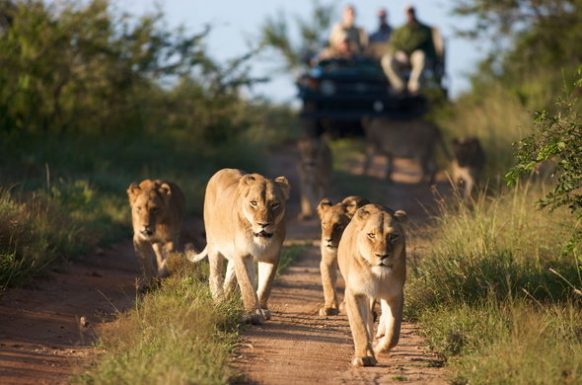
- Once inside the park, tracks are unfenced and shared with wildlife — elephants, buffalo, and warthogs cross regularly, and speed limits (usually 40km/h on main roads, 25km/h on game tracks) exist for a reason.
- Avoid night travel in remote areas; stick to daylight driving both on the approach roads and inside the park, where gates typically post a 7pm closing time, though guests staying at lodges or campsites inside the park can enter after that.
Fuel and Practical Stops
- Fill up before leaving Kampala, and top up again in Mbarara or Kasese — these are the two towns to rely on for fuel along the way, and stations get sparser and pricier the closer you get to the park.
- Carry cash (UGX) for park fees, small purchases, and tipping — ATMs exist in Mbarara and Kasese, but it’s best to carry cash for park entry and incidental costs.
- Carry a spare tyre as standard practice for this route, not just a precaution.
Park Entry Fees (Budget Guide)
Fees are set by the Uganda Wildlife Authority (UWA) and vary by residency category — foreign non-resident, foreign resident, and East African Community (EAC) citizen — and different sources quote slightly different current figures, so treat the numbers below as a planning guide and confirm exact rates with UWA or your rental/tour operator before you travel:
| Fee type | Foreign non-resident | Foreign resident | EAC citizen |
|---|---|---|---|
| Daily park entry (adult) | ~US$35–40 | ~US$25–30 | UGX 20,000–30,000 |
| Daily park entry (child 5–15) | ~US$15–20 | ~US$10–15 | UGX 5,000–10,000 |
| Vehicle entry (saloon car) | ~US$40 | — | UGX 20,000 |
| Kazinga Channel boat cruise | ~US$25–30 | ~US$20–25 | UGX 20,000–30,000 |
| Chimpanzee tracking, Kyambura Gorge | ~US$50–100 | ~US$40–80 | UGX 30,000–50,000 |
Children under 5 generally enter free. Entry permits are typically valid for 24 hours from time of purchase, not a calendar day, so plan your gate time accordingly since the fee renews after 24 hours. Bring photo ID or a passport — you’ll need to present valid identification confirming your residency status at the gate, commonly Kabatoro main gate.
Suggested Self-Drive Itinerary
Day 1 — Kampala to QENP (via Mbarara). Leave early to clear Kampala traffic. Fuel and lunch stop in Mbarara. Arrive at the park in the afternoon, check into your lodge or campsite, and use late afternoon for a first taste of a game drive if time allows.
Day 2 — Kasenyi plains dawn drive + Kazinga Channel cruise. An early start onto the Kasenyi track gives the best odds of lions and large kob herds before the heat sets in. Midday boat cruise on the Kazinga Channel for hippo, buffalo, and birdlife — no driving required, and it’s a good break from the wheel.
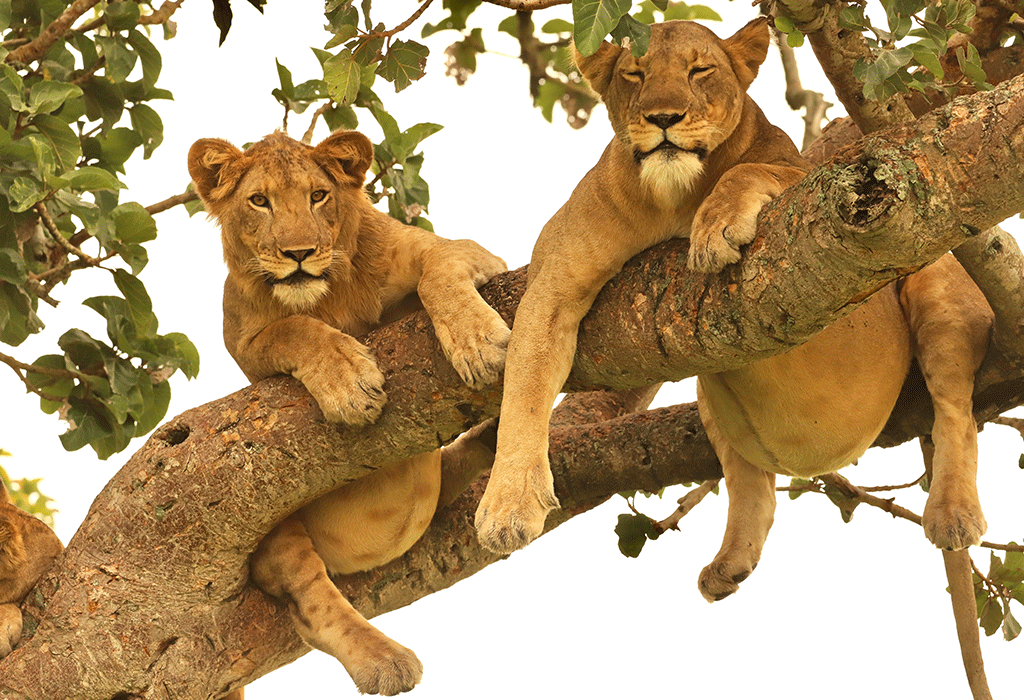
Day 3 — Ishasha sector for tree-climbing lions. A half-day out and back (or a stopover if continuing toward Bwindi), driving the rougher southern tracks specifically to look for lions draped in the fig trees.
Day 4 — Depart via the Fort Portal route, looping back to Kampala with a detour into Kibale for chimpanzee tracking, or continue on toward Bwindi if gorilla trekking is next on your route.
This kind of loop — Entebbe or Kampala out through one park corridor and back through another — is a common structure for longer self-drive itineraries, and it can be extended by continuing south from Queen Elizabeth to Bwindi for gorilla trekking before looping back via Mbarara if you have more than four or five days available.
Safety Notes for Self-Drivers
- Road safety advisories for the wider region have flagged the Ishasha area in the past — two isolated terrorism incidents in 2019 and 2023 led some government travel advisories to caution against the area, though there have been no further incidents since and many self-drivers consider the actual risk low. Make your own informed call, check current advisories before travel, and avoid driving after dark in remote stretches regardless.
- Wildlife has right of way. Never approach or feed animals from the vehicle, keep windows up around elephants and buffalo, and don’t get boxed in on narrow tracks.
- Drive well within your comfort zone on wet murram — this is where most self-drive mishaps happen, not on the tarmac approach roads.
Quick Prep-departure Checklist
- 4×4 vehicle with a full-size spare, jack, and tow rope
- Offline maps downloaded (Google Maps offline area + Maps.me as backup)
- Cash in UGX for gate fees, plus ID/passport for entry
- Full fuel tank leaving Kampala; plan refuels in Mbarara or Kasese
- Confirmed UWA fee rates for your residency category before arrival
- Daylight-only driving plan, with a buffer for Kampala traffic on departure
Self-driving Queen Elizabeth National Park is one of the more approachable safari road trips in East Africa — the infrastructure is there, the routes are well documented, and the payoff of setting your own pace on the Kasenyi plains or along the Kazinga Channel is hard to beat. Prepare the vehicle properly, budget realistic time for the drive in, and the rest of the trip largely takes care of itself.
Planning to rent a car in Uganda for self drive to Queen Elizabeth national park- simply contact us now by sending an email to info@ugandacarrentaldeal.com or call us now on +256-700135510 to speak with the reservations team.