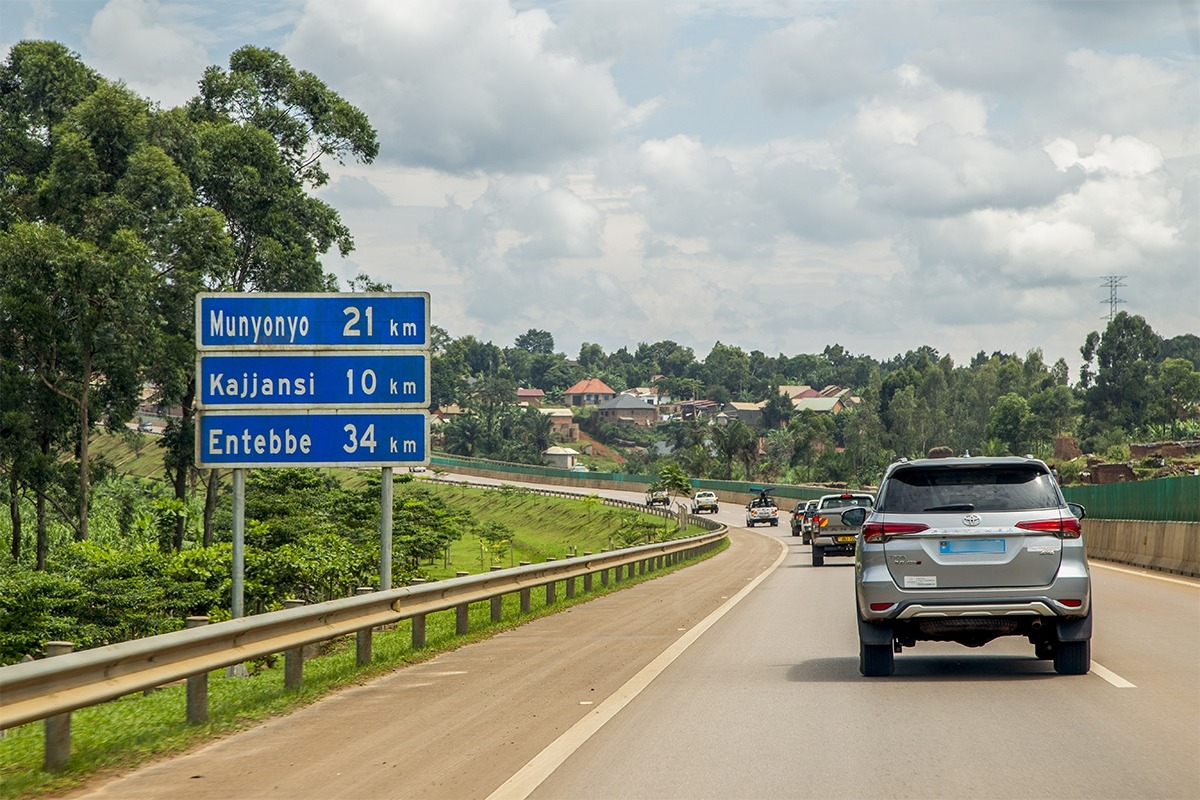
Uganda’s road network is a study in contrasts. Drive the Kampala–Entebbe Expressway and you’d think you were on a modern European toll road. Turn off toward Kidepo Valley or the Bwindi highlands an hour later, and that same smooth tarmac gives way to rutted murram track that punishes anything without proper ground clearance. Knowing which stretch of your route falls into which category — before you book a vehicle, not after you’re stuck in one — is one of the most useful things a traveler can plan for in 2026.
The Big Picture: Uganda’s Road Network in 2026
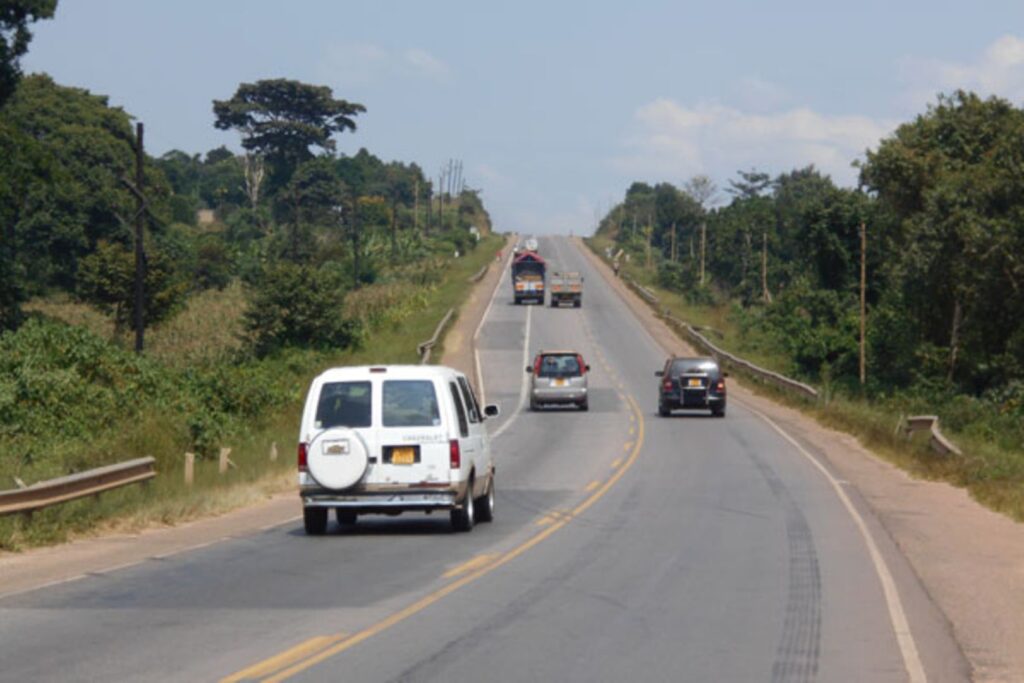
Uganda’s roads split broadly into two categories: paved highways connecting major towns, and unpaved murram (laterite gravel) roads that make up the majority of the network, including nearly all approach roads into national parks. Even the paved sections aren’t fully hands-off — potholes develop quickly after heavy rain, and speeds often need to drop sharply through damaged stretches regardless of how good the road looked on the map.
The country’s two rainy seasons, roughly March–May and September–November, are when the difference between a 4×4 and a standard car becomes most obvious. Murram roads that are firm and manageable in the dry season can turn to deep, clinging mud within hours of a downpour.
Roads Where a 4×4 Is Non-Negotiable
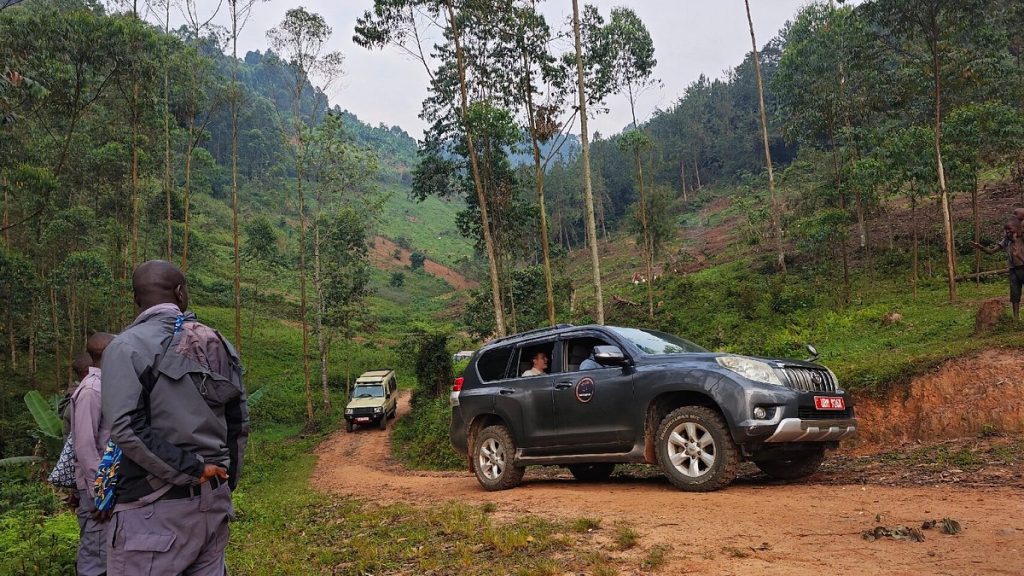
Bwindi’s inter-sector roads. The routes connecting Bwindi Impenetrable National Park’s different trekking sectors involve steep hills, sharp bends, and narrow mountain roads that become genuinely difficult in wet weather. This is consistently ranked among the most demanding drives in the country, and a capable 4×4 isn’t optional here.
The road to Ishasha (Queen Elizabeth National Park). The route to Queen Elizabeth’s famous tree-climbing lion territory runs through remote terrain on rough gravel, and deep ruts form quickly during rainy periods — enough to strand an ordinary vehicle without much warning.
Kidepo Valley approach roads. Uganda’s most remote major park sits at the end of a long, rugged drive from Kampala. The final stretch in from Kotido crosses open savannah with no tarmac at all, including dry riverbeds that can fill and become impassable during rain. Services are virtually nonexistent along this route, so a 4×4, extra fuel, and a basic recovery kit aren’t just recommended — they’re close to essential.
Murchison Falls National Park’s internal tracks. The tarmac approach from Masindi is reasonably good, but once inside the park, game-drive tracks — especially in the northern sector around Kaniyo Pabidi and routes toward the Nile Delta — turn into rough, deeply corrugated murram that demands proper suspension and clearance. Getting close to wildlife and reaching the better viewpoints here effectively requires a 4×4.
The Fort Portal–Bundibugyo escarpment road. This route drops sharply through the Rwenzori foothills, with tight bends, steep drops, and a surface that becomes extremely slippery once wet. It’s one of the more dramatic — and demanding — drives in the country.
The southwest corridor toward Bwindi and the Congo border. Parts of this route connecting towns in Uganda’s hilly southwest are paved, but significant stretches off the main highway are murram and deteriorate severely during both rainy seasons.
Roads Where You Can Get Away With Less
Not every route in Uganda demands a full-size 4×4. Compact SUVs and similar vehicles handle most main routes reasonably well during the dry season — the Kampala–Jinja corridor and well-maintained tarmac between major towns fall into this category. The catch is that these lighter vehicles lose capability quickly once rain sets in, and they simply aren’t suited to reaching Bwindi or Kidepo regardless of season.
The Kampala–Entebbe Expressway remains the clear standout for road quality: a modern toll highway connecting the capital to the international airport, and about the closest thing Uganda has to a guaranteed smooth ride.
What This Means for Choosing a Vehicle
- Heading only between Kampala, Jinja, and similar main-route towns in dry season? A mid-range SUV can work.
- Heading to Queen Elizabeth, Murchison Falls, Bwindi, or Kidepo at any time of year? Budget for a proper 4×4 — a Land Cruiser Hardtop, Land Cruiser Prado, or similar high-clearance vehicle.
- Traveling during the rainy seasons (March–May or September–November) anywhere outside the main paved corridors? Treat 4×4 as mandatory, not optional, regardless of destination.
- Planning a remote or multi-day itinerary including Kidepo or deep bush routes? Prioritize a vehicle with strong ground clearance, extra fuel capacity, and a driver or operator who can support you if something goes wrong far from services.
Practical Driving Tips for 2026
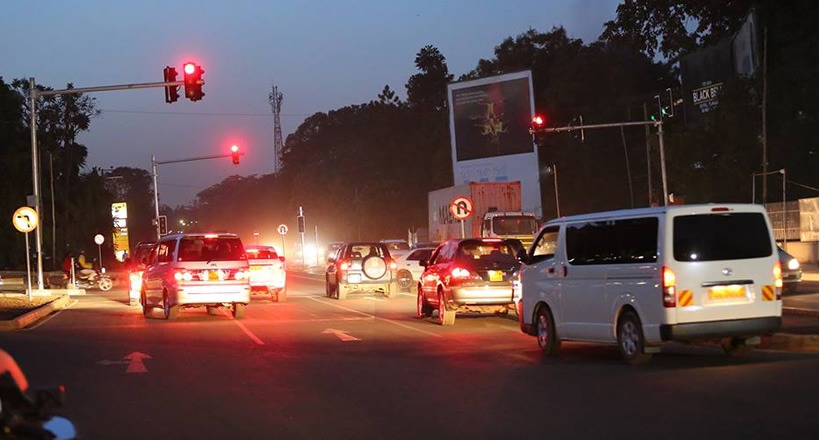
- Avoid night driving throughout Uganda — poor lighting, unmarked pedestrians and cyclists, wandering livestock, and occasional security concerns make after-dark travel genuinely risky. Plan to arrive at your destination before sunset.
- Traffic drives on the left, as in the UK — worth confirming ahead of time if you’re used to right-hand traffic.
- Carry a full tank and, ideally, an extra jerry can on longer or more remote routes, since fuel stations thin out considerably away from major towns.
- Keep offline maps or a local SIM with data as backup; GPS and connectivity can be unreliable in rural stretches.
- Before confirming any vehicle, check the tyres, spare tyre, battery, brakes, suspension, and air conditioning — these details matter more on Uganda’s roads than they would on a typical road trip elsewhere.
- If self-driving still feels daunting after reading this, a driver-guide who already knows the current state of these roads remains the lower-stress option, and is widely considered the more dependable choice for first-time visitors.
Final Thoughts
Uganda’s road conditions haven’t fundamentally changed in 2026 — what has changed is how sharply the gap has widened between its improving highway corridors and its remote park-access roads, which remain as demanding as ever. The rule of thumb holds: if your route touches Bwindi, Kidepo, Ishasha, or the interior tracks of Murchison Falls, plan around a proper 4×4 and factor the rainy seasons into your timing. Get that right, and Uganda’s rougher roads become part of the adventure rather than a risk you didn’t see coming.
Planning to rent a car in Uganda for self drive or driver-guided road trip, we hope this guide helps you make the right vehicle choice for a safe and comfortable road trip. You can contact us now by sending an email to info@ugandacarrentaldeal.com or call us now on +256-779232316.