By Uganda Car Rental Deal — Your Trusted Safari Car Hire Partner in Uganda
Planning a self-drive safari or guided road trip through Uganda’s magnificent national parks is one of the most rewarding adventures a traveler can undertake. The mountain gorillas of Bwindi, the thundering falls of Murchison, the tree-climbing lions of Ishasha, and the chimpanzees of Kibale Forest — Uganda is, without question, the Pearl of Africa.
But with recent Ebola-related headlines circulating across international media, many travelers are asking the same question: Is it safe to go, and how do I protect myself?
At Uganda Car Rental Deal, we have been helping solo explorers, families, couples, and groups navigate Uganda’s roads and parks for years. We understand the terrain, the parks, and the current situation on the ground — and we believe that informed travelers are safe travelers. This guide gives you everything you need to know about Ebola, how it spreads, how to protect yourself, and how to plan your Uganda safari with confidence and care.
First, Understand the Current Situation
In May 2026, the World Health Organization confirmed an Ebola outbreak in Uganda linked to the Bundibugyo virus strain, with imported cases originating from the Democratic Republic of Congo. Cases have been confirmed in Kampala, and international health advisories have been updated accordingly. Several governments have issued Level 4 “Do Not Travel” advisories, and enhanced health screening is in place at Entebbe International Airport.

This is a serious public health event — and it deserves a serious, honest response.
The reassuring context is that Uganda has successfully beaten Ebola multiple times before — in 2000, 2007, 2011, 2012, 2019, and 2022. The country’s Ministry of Health has extensive outbreak experience, has activated rapid response teams, and is working closely with the WHO and international partners to contain the situation. Safari operations, gorilla trekking, and wildlife tourism across most of Uganda’s national parks continue under normal guidelines.
The Canadian government puts it plainly: the risk of getting the virus is low for most travellers if the proper precautions are followed.
The Single Most Important Fact About Ebola
Before packing your bags or cancelling your trip, understand this fundamental truth that most media coverage fails to lead with:
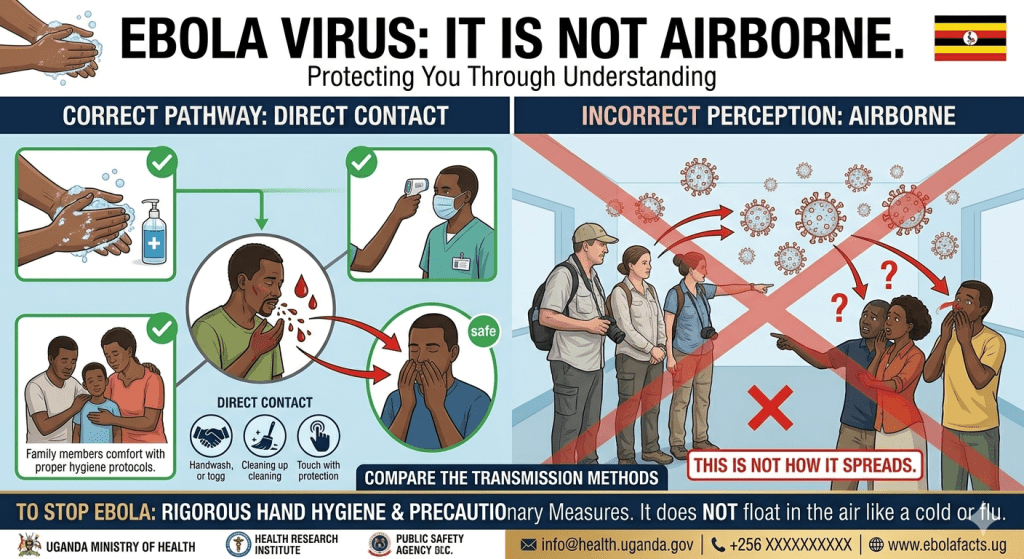
Ebola is NOT airborne.
You cannot contract Ebola by breathing the same air as an infected person, sharing a vehicle, sitting in the same restaurant, or passing someone on a trail. Unlike influenza or COVID-19, Ebola requires direct contact with the blood, body fluids, or organs of a person who is already visibly and severely ill. For a self-drive safari traveler exploring game parks and forest reserves — at a safe distance from local clinical settings — the practical exposure risk is fundamentally different from that of healthcare workers or community caregivers.
This is not reassurance for its own sake. It is science.
Before You Leave Home: Pre-Departure Checklist
Smart protection starts well before you arrive in Uganda. Here is what every traveler should do in advance.
✅ Check your government’s current travel advisory Travel advisories change quickly during outbreaks. Visit your country’s foreign affairs or state department website for the most current guidance. Set a Google alert for “Uganda travel advisory” so you receive real-time updates.
✅ Register with your embassy in Kampala Enroll in your country’s traveler registration programme — for Americans, this is the State Department’s STEP programme at step.state.gov. This allows your embassy to reach you with real-time safety alerts and assist you in an emergency.
✅ Visit a travel medicine clinic Book a consultation at least four to six weeks before departure. Confirm your Yellow Fever vaccination is current — it is a mandatory entry requirement for Uganda. Your travel doctor can also advise on general health preparation for East Africa travel.
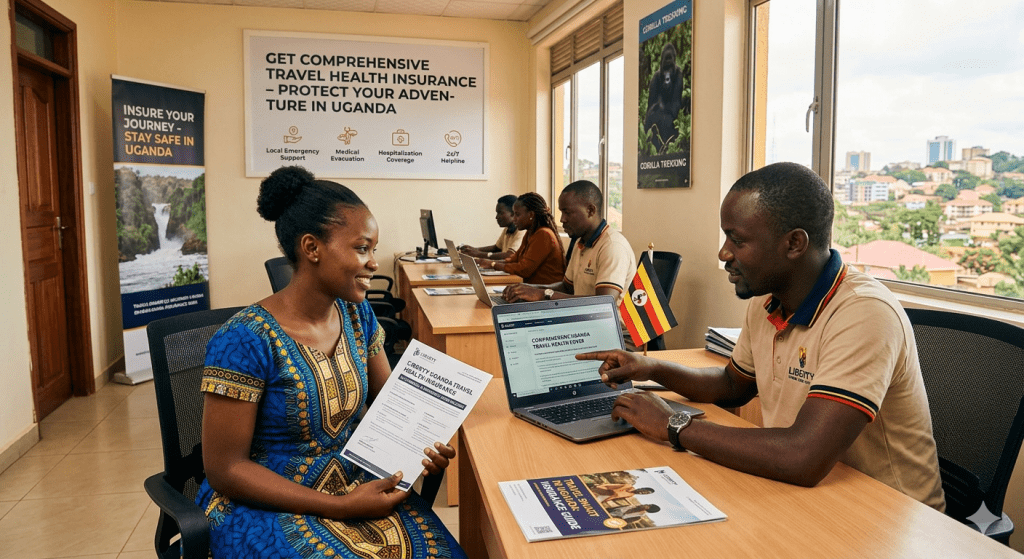
✅ Get comprehensive travel insurance with medical evacuation cover This is non-negotiable. Medical evacuation from a remote Ugandan park to a well-equipped facility can cost tens of thousands of dollars. Ensure your policy covers outbreak-related trip cancellation as well as emergency evacuation.
✅ Pack your personal hygiene kit Bring a generous supply of alcohol-based hand sanitiser (minimum 60% alcohol content), antibacterial hand soap, and a pack of disposable gloves. These are simple, lightweight, and among the most effective tools in your kit.
On the Road with Uganda Car Rental Deal: Staying Safe in Your Vehicle
One of the real advantages of a self-drive safari with Uganda Car Rental Deal is the level of personal control it gives you. In your own 4×4 Toyota Land Cruiser or safari van, you are not crowded into shared transport or group settings. You control who enters your vehicle, when you stop, and which environments you move through.
Here is how to make the most of that independence:
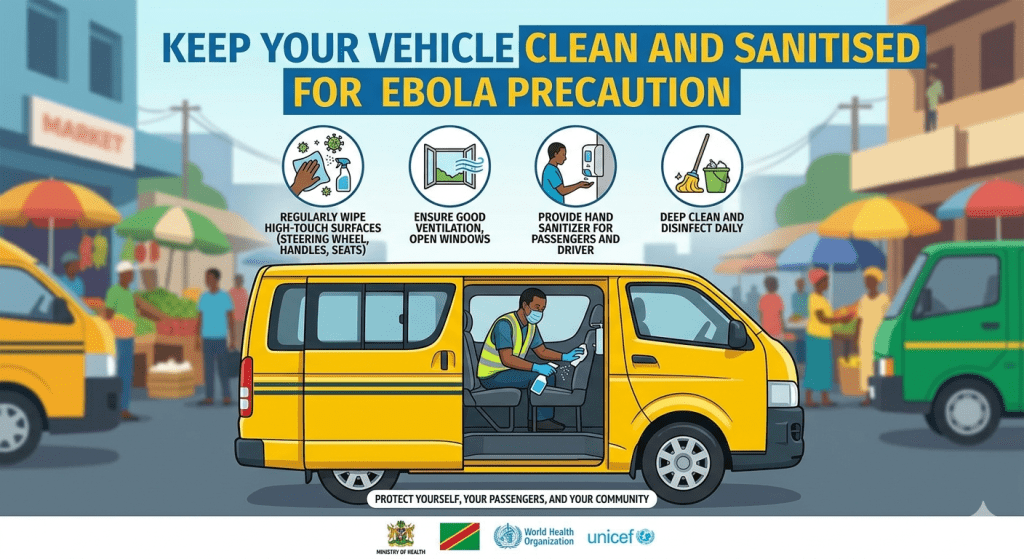
Keep your vehicle clean and sanitised. Before starting each day’s drive, wipe down high-touch surfaces inside the vehicle — door handles, steering wheel, gear stick, and dashboard controls — with antibacterial wipes. Our vehicles at Uganda Car Rental Deal are thoroughly cleaned and sanitised between rentals, but maintaining hygiene during your trip is your responsibility too.
Limit unnecessary stops in dense urban settings. While Kampala and Entebbe are vibrant, fascinating cities worth exploring, during an active outbreak period it is sensible to minimise prolonged time in crowded markets, busy healthcare areas, or public spaces where maintaining distance is difficult. Plan your route with this in mind.
Always carry hand sanitiser in the vehicle. Keep a bottle within reach at all times. Use it after touching fuel pumps, border posts, park gate barriers, and any shared surfaces during your journey.
Follow park gate entry protocols without exception. Uganda Wildlife Authority has implemented health screening at park entry points during the outbreak period. Cooperate fully with temperature checks, health declarations, and any other measures in place. These protocols protect you, fellow visitors, and the wildlife.
Daily Precautions That Could Save Your Life
The following behaviours, consistently applied throughout your safari, give you the strongest possible protection.
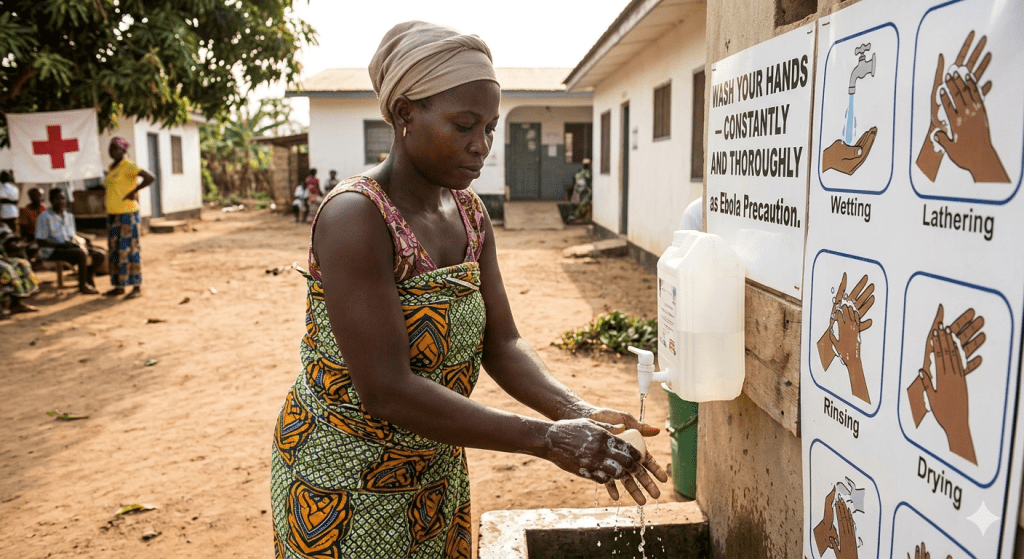
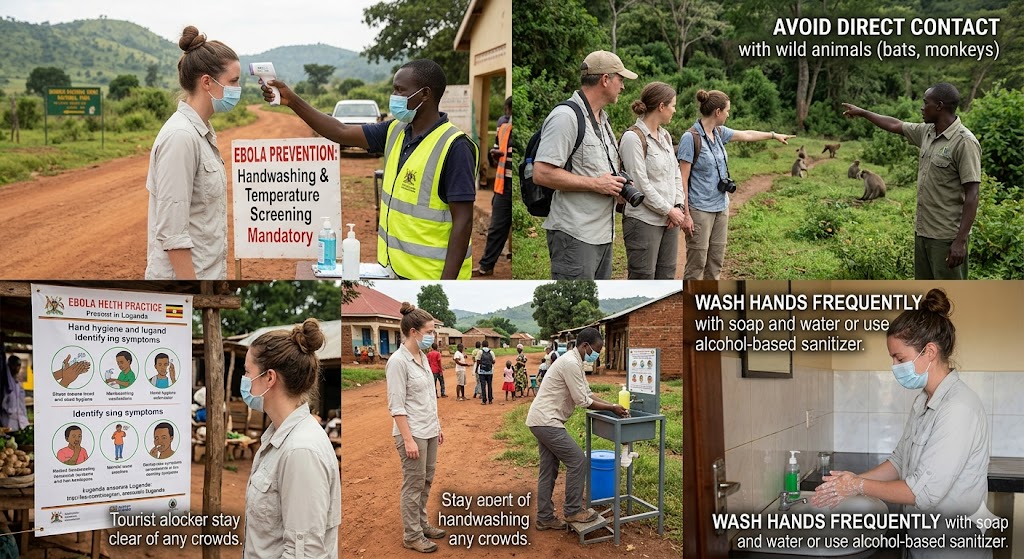
Wash your hands — constantly and thoroughly. This is the single most repeated instruction from every major health authority, including the CDC, WHO, and Johns Hopkins Medicine. Before every meal. After every bathroom visit. After animal encounters. After touching shared surfaces. Soap and water for at least 20 seconds, or hand sanitiser when water is unavailable.
Avoid contact with anyone who appears severely ill. Do not assist, touch, or provide physical care for any person showing signs of serious illness — particularly sudden fever, extreme weakness, vomiting, diarrhoea, or unexplained bleeding. Alert your tour guide, park rangers, or local authorities and let trained personnel respond.
Never touch a deceased person. The CDC explicitly advises travelers to avoid all contact with anyone who has died from suspected or confirmed Ebola. In some communities, traditional funeral practices involve physical contact with the deceased — this has historically been a major transmission pathway. As a tourist, respectfully decline any participation in funeral or burial ceremonies.
Do not eat bushmeat — under any circumstances. This is one of the clearest risk factors for zoonotic disease transmission. Avoid any wild game sold in local markets, including bat meat, primate meat, or unidentified bush protein. Do not handle live or dead bats, forest antelopes, non-human primates, or their blood or raw meat.
Choose your food and water carefully. Eat freshly cooked meals served at proper temperatures. Drink bottled or properly purified water throughout your trip. Stick to the kitchens of reputable lodges, safari camps, and established restaurants. These habits apply to any East Africa travel and are more important than ever during an active outbreak.
Maintain the recommended distance from gorillas and other primates. Uganda Wildlife Authority requires a minimum distance of seven metres between tourists and mountain gorillas during trekking. Wear your face mask. Follow every instruction from your UWA ranger guide without exception. Mountain gorillas share roughly 98% of human DNA and are susceptible to human diseases. These rules protect them — and protect you.
What You Cannot Catch Ebola From
Because fear spreads faster than facts, it is worth being precise about what poses no transmission risk whatsoever.
You cannot contract Ebola from:
- Mosquito or insect bites
- Drinking water or local food (outside the bushmeat precaution)
- Casual conversation or being near someone who is not yet showing symptoms
- Sharing a safari vehicle with healthy fellow travelers
- The air in game parks, forests, or open savannah environments
- Swimming in lakes or rivers
Ebola does not transmit during its incubation period of two to twenty-one days. A person must be actively, visibly sick — and typically severely so — to transmit the virus.
After Your Safari: The Critical 21-Day Window
Your responsibility as a safe traveler does not end when you board your return flight. The CDC advises all travelers returning from outbreak-affected areas to monitor themselves for symptoms for 21 full days after leaving Uganda.
Watch carefully for: sudden fever, severe headache, muscle pain, fatigue, weakness, diarrhoea, vomiting, stomach pain, or unexplained bleeding or bruising.
If any symptoms develop within that 21-day window:
- Do not walk into a hospital or clinic without calling ahead
- Contact your national health authority immediately and describe your recent travel history
- Isolate yourself from others while awaiting instructions
- Act quickly — early supportive care significantly improves survival outcomes
Note also that travelers returning from Uganda to the United States are currently required to enter through designated airports with enhanced CDC health screening. Check the CDC and State Department websites for the most current entry requirements before flying home.
Book Your Safari Vehicle with Confidence
At Uganda Car Rental Deal, we offer a comprehensive fleet of well-maintained 4×4 vehicles — including Toyota Land Cruisers, Safari Vans, and RAV4s — for both self-drive and driver-guided safaris across Uganda’s most spectacular parks and destinations. Whether you are heading to the gorilla forests of Bwindi, the wildlife corridors of Queen Elizabeth, the waterfalls of Murchison, or the chimpanzee trails of Kibale, we will put the right vehicle under you for the journey.
We sanitise all vehicles between rentals. Our team monitors park access and road conditions in real time. And when the current situation evolves — as Uganda’s have always done, toward resolution — we will be here, ready to get you on the road.
Contact Uganda Car Rental Deal today to discuss your safari plans, check vehicle availability, and get expert on-the-ground advice for traveling Uganda safely and smartly.
The Bottom Line
Ebola demands respect — not panic. For a safari traveler in a well-maintained 4×4, moving through Uganda’s wild and beautiful national parks, the practical risk is low provided you follow the precautions in this guide. Wash your hands. Avoid the sick. Stay away from bushmeat. Follow your ranger’s instructions. Monitor your health after you return.
Uganda has beaten this virus before. It will beat it again. And when it does, the gorillas of Bwindi, the lions of Ishasha, and the falls of Murchison will still be waiting — as extraordinary as ever.
Travel smart. Stay safe. And let Uganda Car Rental Deal drive your adventure.
Sources: U.S. Centers for Disease Control and Prevention (CDC) | World Health Organization (WHO) | Johns Hopkins Medicine | Government of Canada Travel Advisory for Uganda | Uganda Ministry of Health
This article is for informational purposes only. Always consult your government’s current travel advisory and a qualified travel medicine professional before booking international travel during an active health event.
Uganda Car Rental Deal | Your Premier Safari Car Hire Partner 📞 Call or WhatsApp us on +256-7792323167 to book your 4×4 today or email to info@ugandacarrentaldeal.com.