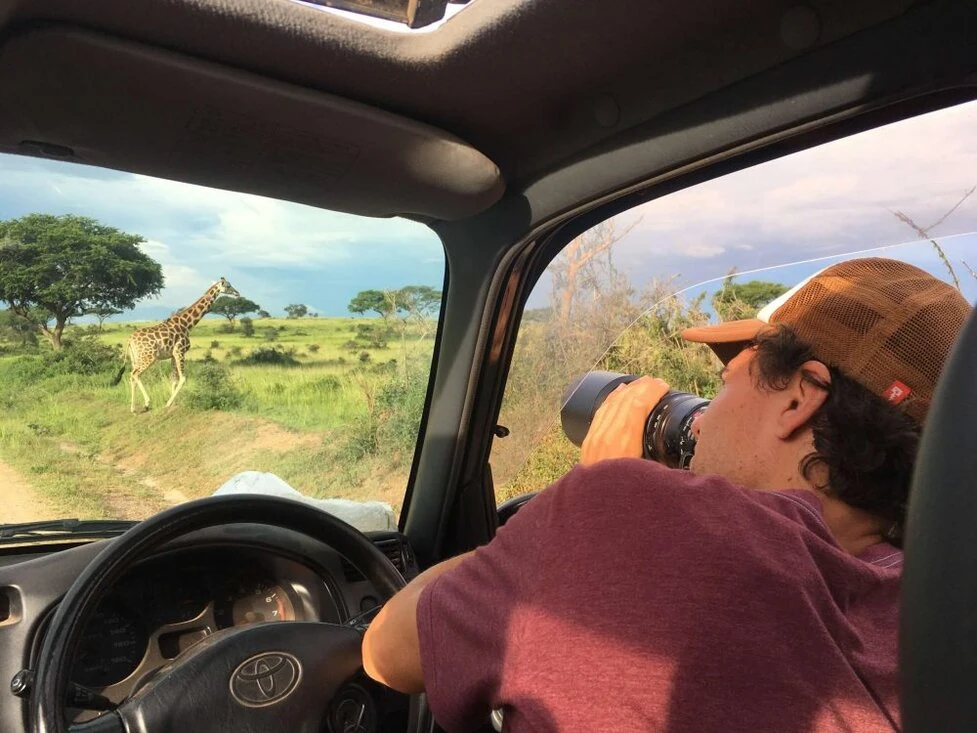
Ask any experienced wildlife photographer what made the difference between a good shot and a missed one, and the answer often has nothing to do with camera settings. It’s about positioning, stability, and having the right platform to shoot from in the first place. In Uganda’s national parks, where a lion might be resting fifteen feet from the track or an elephant could be crossing at eye level, the vehicle you’re shooting from is just as much a part of your kit as your lens.
For photographers planning a trip to the Pearl Of Africa, choosing a rental car in Uganda isn’t just about comfort and reliability — it’s about whether the vehicle actually helps or hinders the shot.
Why Standard Rental Cars Fall Short
A regular sedan or compact SUV, perfectly fine for a city trip or a standard tourist safari, creates real limitations for photography. Fixed windows that only roll down partway restrict your shooting angle. Low ground clearance keeps you further from elevated wildlife like giraffes or tree-climbing lions. And without a stable surface to rest a long lens on, even a sharp auto focus system struggles to compensate for hand-shake on a 400mm or 600mm lens during a long telephoto shot.
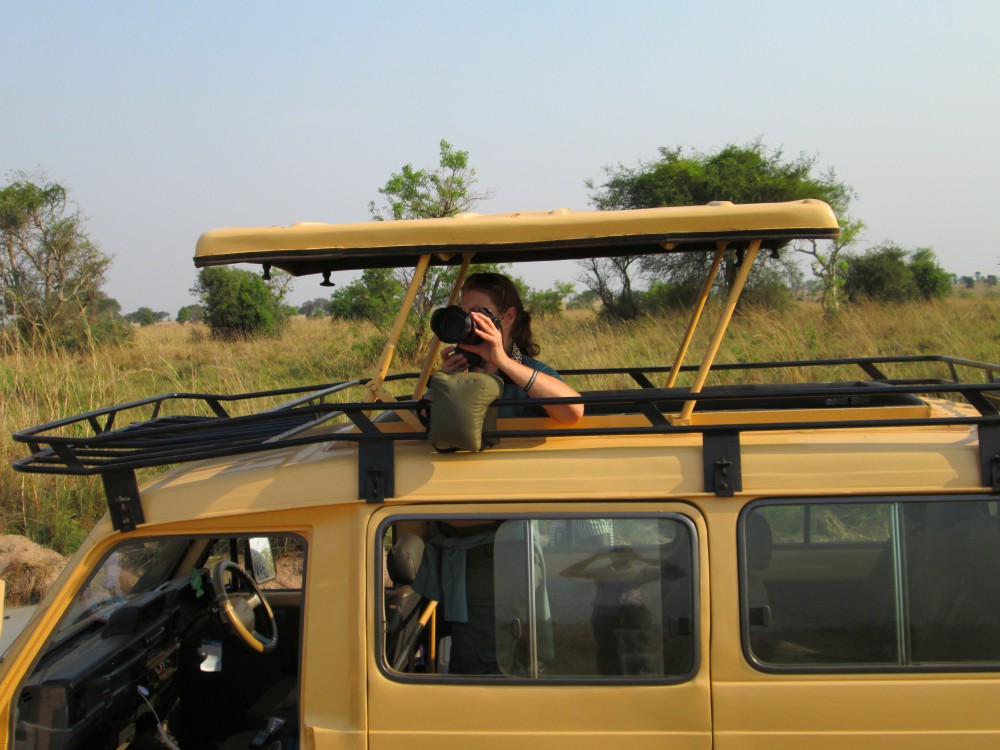
This is why photographers touring Uganda’s parks — Queen Elizabeth, Murchison Falls, Kidepo Valley, and Lake Mburo among them — typically look for a specific set of vehicle features rather than booking whatever cheapest or most available.
What to Look for in a Photography-Ready Vehicle
Pop-up roofs and roof hatches. A vehicle with a pop-up or open-roof hatch changes the entire shooting experience. Standing through an open roof gives you a full 360-degree field of view, better light angles, and the elevation needed to shoot over tall grass — something a fixed-window vehicle simply can’t offer. Several Land Cruiser configurations used for Uganda safaris come with this feature built in, and it’s worth confirming before booking rather than assuming.
Beanbag-compatible window ledges. A flat, wide window ledge is essential for resting a beanbag — the preferred stabilization method for most wildlife photographers, since tripods are impractical inside a moving or repositioning vehicle. Not all rental vehicles have window design suited to this; older or narrower window frames can make beanbag positioning awkward, particularly for longer lenses.
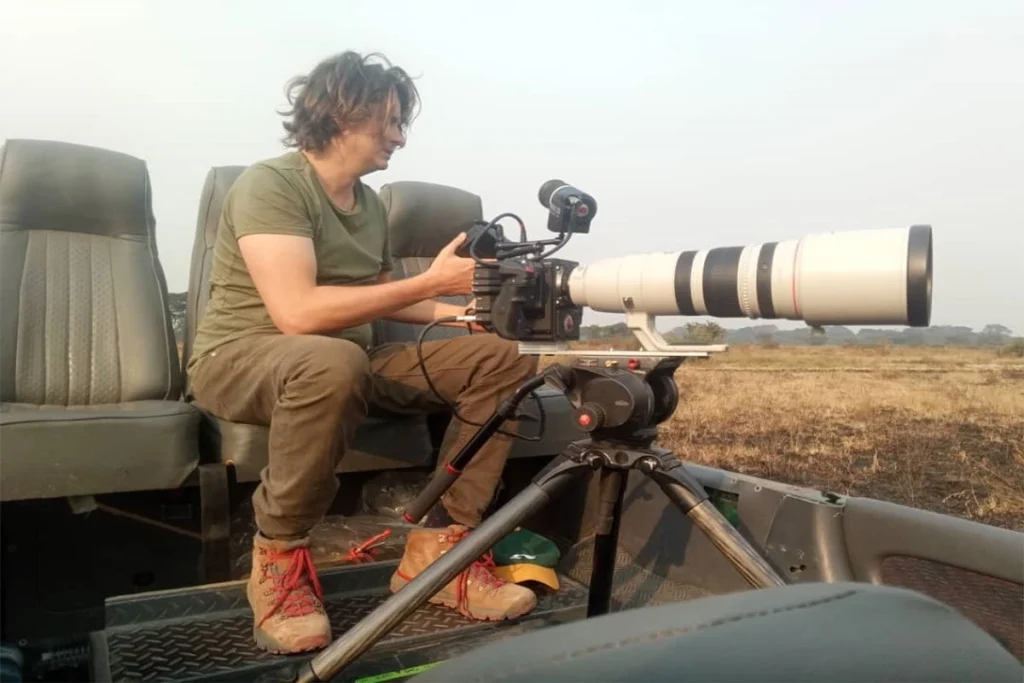
High ground clearance. Beyond handling rough park roads, a higher vehicle position gives photographers a better vantage point over grass and shrubs, particularly useful in Queen Elizabeth’s savanna sections and Kidepo’s more remote terrain, where wildlife often sits low in cover.
Quiet engine and smooth idling. Diesel Land Cruisers are the standard safari vehicle across East Africa for good reason — reliability aside, a smoothly idling engine matters when you’re parked still, waiting for a shot, and don’t want engine vibration transmitting into a long lens resting on a beanbag.
Charging capability. Long days in the field mean drained camera batteries and full memory cards. A vehicle with a working power inverter or USB charging point is a small detail that matters over a multi-day shoot, particularly for photographers running multiple camera bodies.
Driver-Guides Who Understand Photography
A driver who understands wildlife photography is arguably as valuable as the vehicle itself. Photography-aware driver-guides know to position the vehicle with the sun behind the photographer rather than into the lens, to approach at an angle that keeps the animal’s face visible rather than its rear or side, and to cut the engine during a sighting to eliminate vibration and noise. They also understand the difference between “good enough for viewing” and “good enough for a shot” — patience to wait for a better angle, rather than moving on after a quick glimpse, often makes the difference between a forgettable photo and a portfolio image.
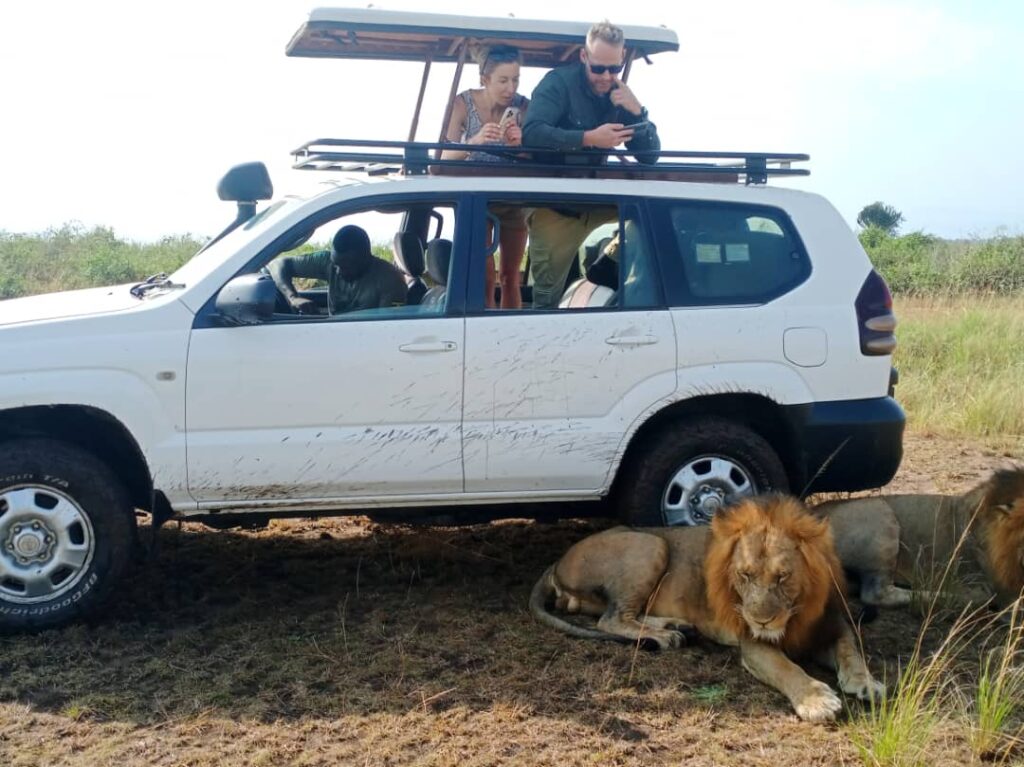
When booking, it’s worth asking directly whether your driver-guide has experience working specifically with photographers, rather than general tourists, since the pacing and positioning priorities are genuinely different.
Choosing the Right Vehicle for Your Kit
For photographers traveling solo or in pairs with substantial gear — multiple bodies, several lenses, a laptop for backups — a Land Cruiser with a pop-up roof and ample interior space offers the best balance of stability, storage, and shooting position. Larger groups or workshops often opt for a safari van with multiple roof hatches, allowing several photographers to shoot simultaneously without competing for the same angle. Rooftop tent Land Cruisers add another layer of flexibility for photographers planning early-morning starts near remote parks like Kidepo, where staying inside or near the park overnight can mean being in position before sunrise, when animal activity and light are both at their best.
Getting the Shot Starts Before You Arrive
Wildlife photography in Uganda rewards preparation as much as instinct. Choosing a vehicle built for the job — with the right roof access, stable shooting surfaces, and a driver who understands what you’re there to capture — removes friction between you and the shot long before you ever raise the camera. The animals will only cooperate for so long; the vehicle shouldn’t be what costs you the frame.
Planning to visit Uganda on photography safari and require a rental car for self drive or with a driver- simply contact us now by sending an email to info@ugandacarrentaldeal.com or call us now on +256-700135510.