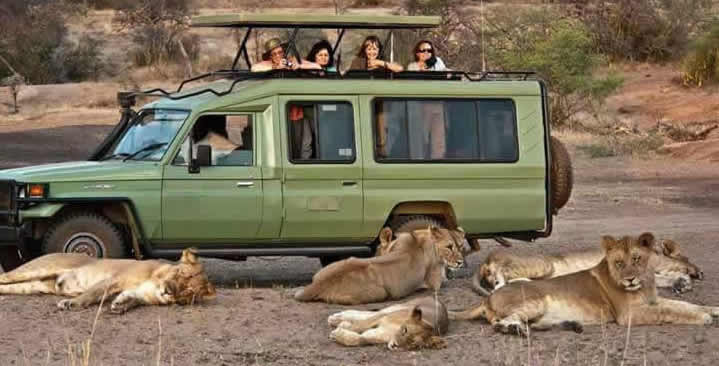
There’s a moment on every first safari that visitors remember forever: a lion lifts its head, looks directly at the vehicle, and then simply goes back to sleep. No charge. No flight. Just quiet indifference. For newcomers, it can feel almost unbelievable — how can an animal capable of killing a buffalo not care that a truck full of people just rolled up beside it?
The answer lies in decades of careful behavioral adaptation, and understanding it is the key to having safer, closer, and more rewarding wildlife encounters in Uganda’s national parks.
Why Animals Tolerate Vehicles at All
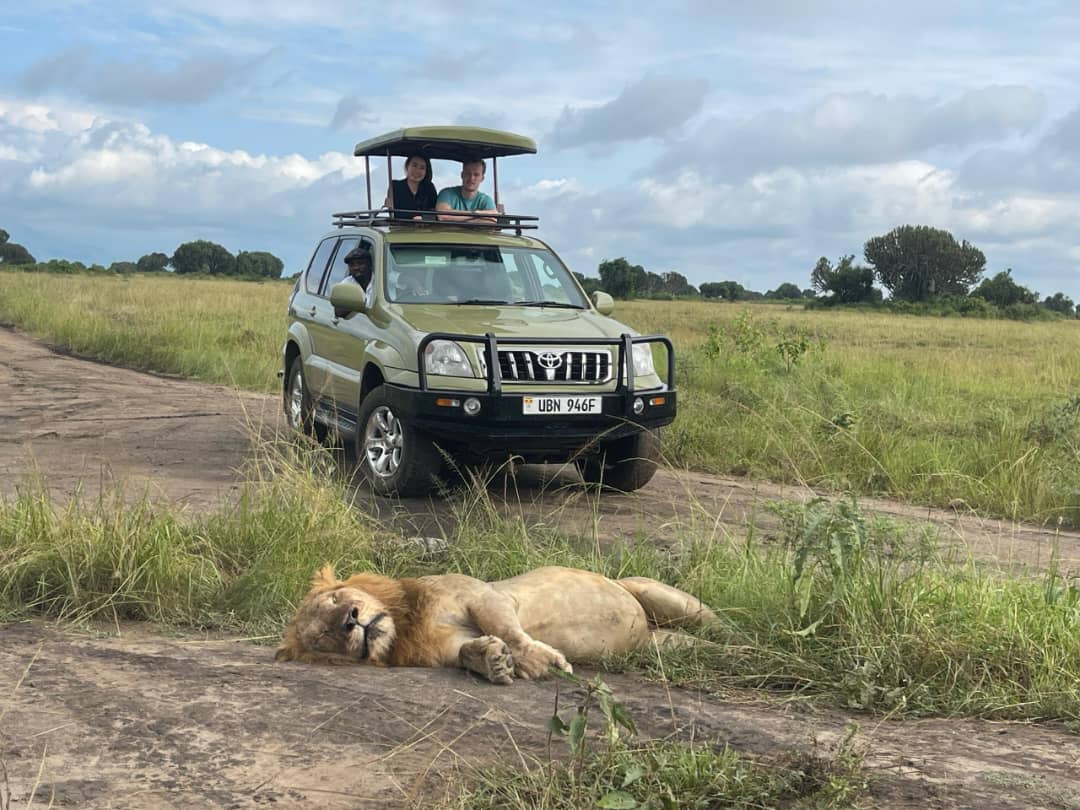
Wild animals in heavily visited parks like Queen Elizabeth National Park, Murchison Falls, and Kidepo Valley have grown up around safari vehicles. Over generations, many species have learned to treat a vehicle as a single, non-threatening, unfamiliar “object” — rather than as a group of humans. This process, known as habituation, is why a lion will ignore a jeep but immediately bolt if a person steps out of it.
This is also why guides are so insistent about staying inside the vehicle. The animal’s calm reaction is conditional. It applies to the vehicle as a whole, not to the humans inside it once they’re visible and separated from that shape. Break that shape, and the “invisible cloak” disappears.
How Different Animals Actually Respond
Not all wildlife reacts the same way, and understanding these differences helps visitors know what to expect — and how to behave.
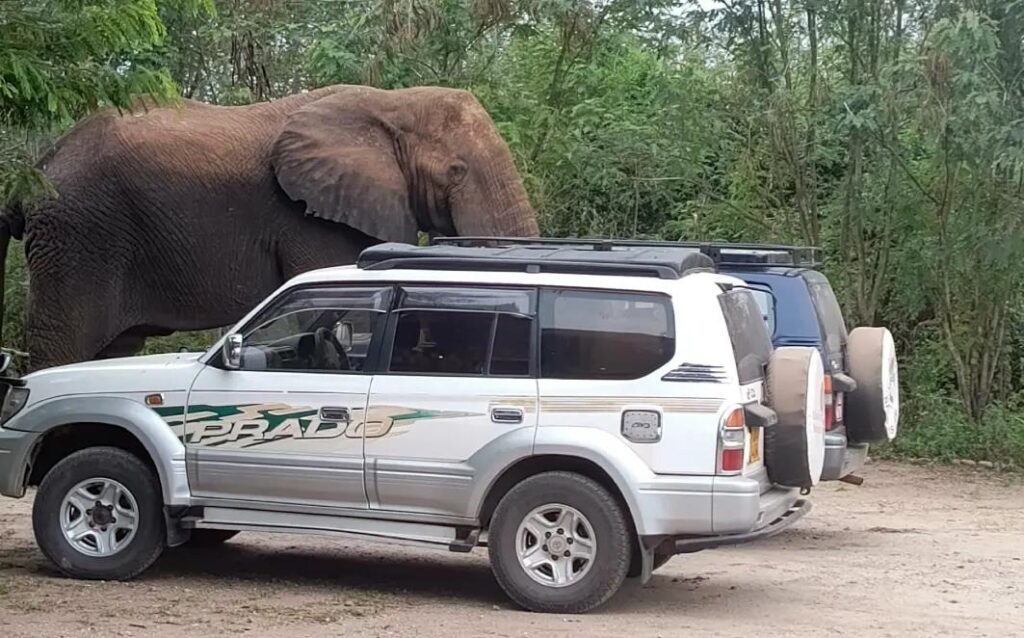
Elephants are intelligent and highly aware of vehicles. In Murchison Falls and Queen Elizabeth, most elephants are relaxed around slow-moving cars, but mothers with calves can become defensive quickly. A raised trunk, spread ears, or a mock charge are clear signals to reverse calmly, not speed away.
Lions and leopards tend to be the most habituated large predators, largely because their calm demeanor and daytime resting patterns make them frequently observed. They often use vehicle shade for relief from the sun, occasionally resting directly under jeeps.
Buffalo, by contrast, are far less predictable. They’re known among guides as one of the more dangerous animals precisely because their tolerance for vehicles is inconsistent — a lone bull may stand its ground or shift aggressively with little warning.
Hippos and crocodiles, especially along the Kazinga Channel and the Nile, are highly sensitive to sudden movement and noise near water. Boats and vehicles that maintain distance and quiet get long, undisturbed viewing; those that don’t often trigger fast retreats or aggressive splashing.
Antelope, kob, and warthog are typically the most skittish, often bolting at the first sound of an engine or door — a reminder that habituation is strongest in top predators and weakest in prey species that rely on fast escape as a survival strategy.
What Determines a Calm Reaction vs. a Defensive One
Three factors consistently shape how wildlife responds to safari vehicles:
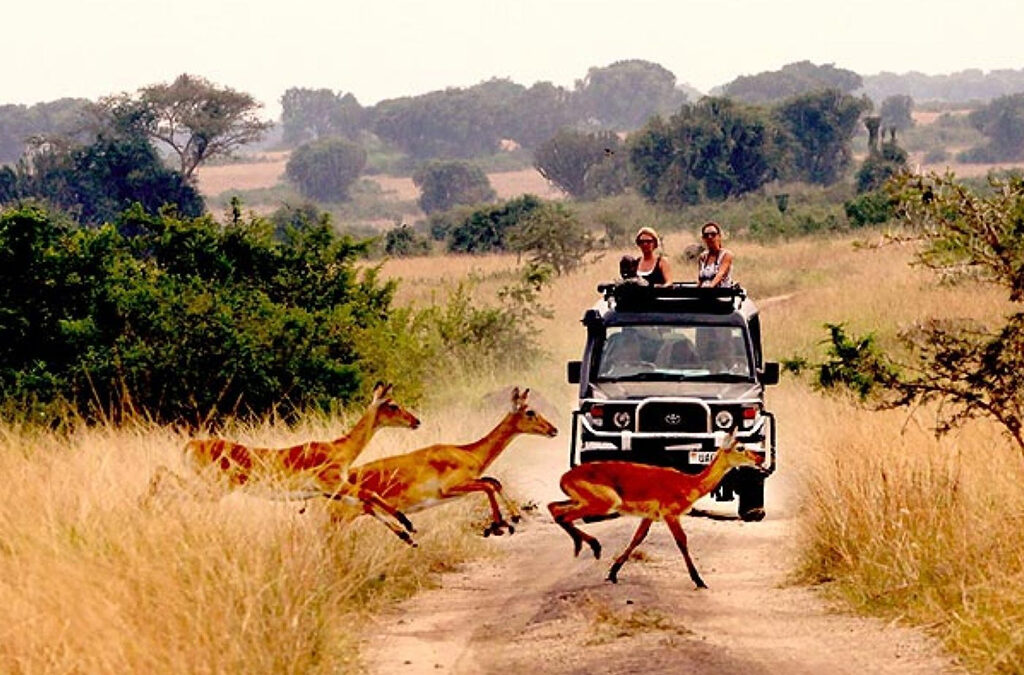
- Vehicle speed and noise. Slow, steady movement is read as non-threatening. Sudden acceleration, revving, or braking mimics predator behavior and can trigger flight or defensive posturing.
- Distance and angle of approach. Approaching an animal head-on or cutting off its path is more likely to provoke a reaction than parking slightly off to the side and waiting.
- Group size and vehicle count. A single vehicle rarely bothers habituated animals. Multiple vehicles crowding one sighting, however, can visibly stress even calm species, particularly big cats with cubs.
Why This Matters for Choosing a Vehicle and Driver
This is where safari planning becomes practical, not just theoretical. A well-maintained 4×4 with a quiet engine, a driver trained in wildlife behavior, and a vehicle that allows slow, controlled positioning all directly affect how close — and how safely — you get to Uganda’s animals.
A noisy, poorly serviced vehicle isn’t just uncomfortable; it can cut a sighting short before you’ve even raised your camera. An experienced driver-guide, on the other hand, reads subtle cues — an elephant’s ear position, a lion’s tail flick — and adjusts positioning before the animal ever needs to react defensively.
This is exactly why the choice of rental vehicle and driver matters as much as the choice of park. The right setup means getting closer to wildlife without ever putting yourself, your group, or the animal at risk.
Getting Closer, the Right Way
Uganda’s parks offer some of the most rewarding, close-range wildlife viewing in Africa — not because the animals are tame, but because decades of respectful, low-impact tourism have taught them that a slow-moving vehicle poses no threat. That trust is fragile, though, and it’s maintained one respectful safari at a time: staying inside the vehicle, moving slowly, keeping noise low, and giving animals room to make the first move.
Understanding how wildlife actually reacts doesn’t just make for better photos — it makes for a safer, more respectful, and ultimately more unforgettable safari.
Ready to Get Closer to Uganda’s Wildlife?
The right vehicle and driver make all the difference between a rushed sighting and a safari moment you’ll never forget. You can rent a 4×4 vehicle in Uganda today for a self drive safari to Queen Elizabeth, Murchison Falls, and Kidepo Valley in comfort, safety, and style. Simply contact us now by emailing to info@ugandacarrentaldeal.com or call/chat with +256-779232316.