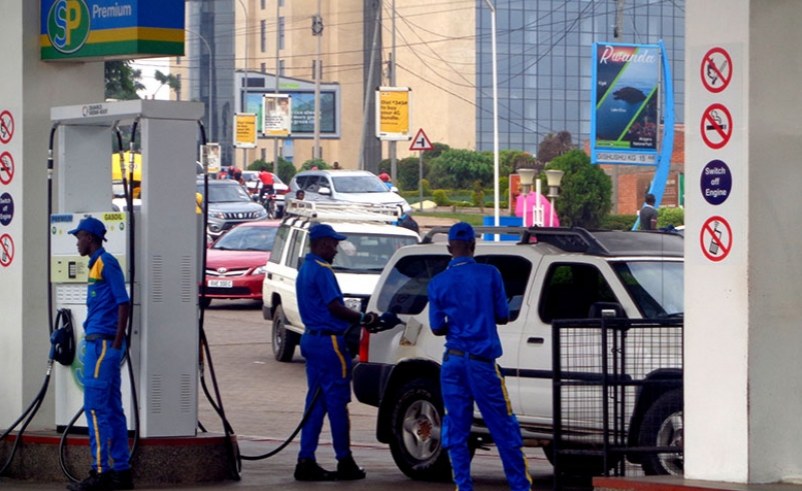
Fuel is one of the easiest safari costs to underestimate. Most travelers budget carefully for permits, lodges, and driver fees, then treat fuel as an afterthought — until they’re staring at a long, dusty drive to Kidepo Valley and realize just how much of the trip is spent on the road. Here’s a practical breakdown of what fuel actually costs across Uganda’s main routes in 2026, and how to budget for it.
Uganda’s Fuel Prices in 2026
Uganda’s fuel market is deregulated, meaning prices move with global oil costs, the exchange rate, and local supply conditions rather than being fixed by the government. Through 2026, pump prices have fluctuated noticeably — spot checks across Kampala stations have shown petrol and diesel both sitting roughly in the range of UGX 5,000 to 6,600 per litre, with the exact price varying by station, brand, and week. In rough dollar terms, that puts fuel at somewhere around $1.30 to $1.70 per litre, which is close to or slightly above the global average.
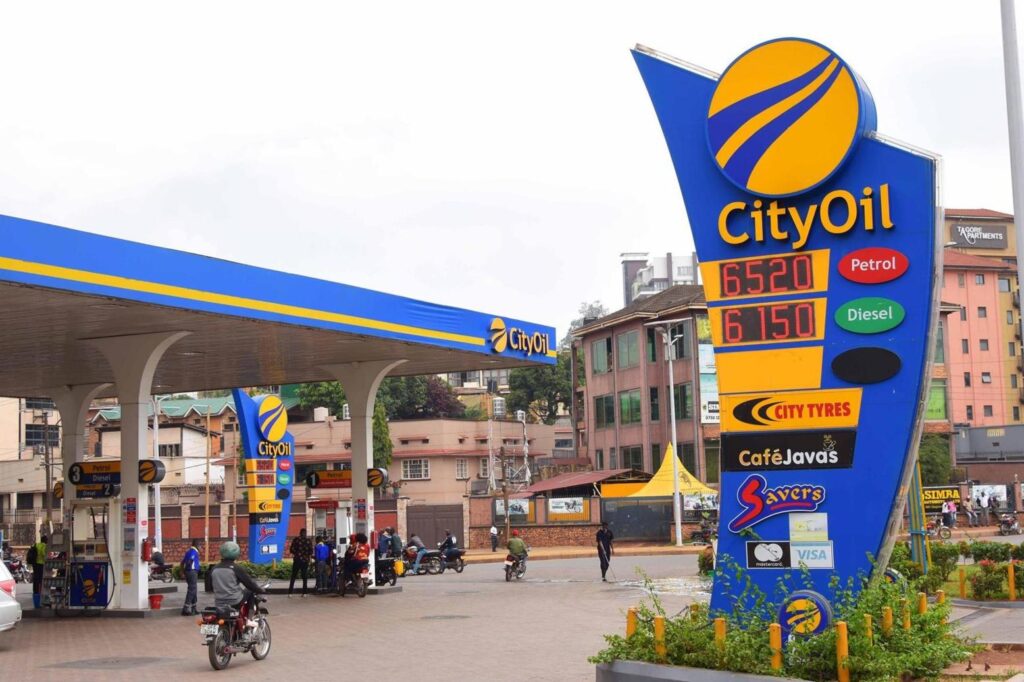
A few things worth knowing about how this plays out day to day:
- Prices in Kampala tend to be the most competitive; expect a premium in more remote towns and near park entrances, where fuel has to travel further to reach the pump.
- Diesel and petrol prices in Uganda often track closely together, unlike some markets where one is consistently cheaper.
- Because prices are deregulated and can shift week to week, it’s worth checking a current rate shortly before your trip rather than relying on last year’s numbers — or last month’s.
How Much Fuel Do Safari Vehicles Actually Use?
Most Uganda safari vehicles are diesel 4x4s — Land Cruisers, Land Cruiser Hardtops, or similar — and typically use somewhere in the range of 10 to 14 litres per 100 kilometers, depending on the vehicle, load, and terrain. Rough, unpaved park roads push consumption toward the higher end of that range; smooth highway driving between towns sits at the lower end. For budgeting purposes, 12 litres per 100 km is a reasonable planning average for a loaded safari vehicle covering a mix of tarmac and murram.
Estimated Fuel Costs by Route
Using that 12L/100km average and a mid-range fuel price around UGX 6,000 per litre (roughly $1.60), here’s what fuel alone tends to cost for popular one-way routes from Kampala:
| Route | Approx. Distance | Est. Fuel Used | Est. Fuel Cost |
|---|---|---|---|
| Kampala to Murchison Falls | ~305 km | ~37 L | ~UGX 220,000 (~$60) |
| Kampala to Queen Elizabeth NP | ~410 km | ~49 L | ~UGX 295,000 (~$78) |
| Kampala to Kibale Forest | ~360 km | ~43 L | ~UGX 260,000 (~$69) |
| Kampala to Bwindi (via Kabale) | ~510 km | ~61 L | ~UGX 367,000 (~$97) |
| Kampala to Kidepo Valley | ~570 km | ~68 L | ~UGX 411,000 (~$109) |
These figures cover one-way fuel only — double them for a round trip, and add extra for internal park game drives, which can easily add another 50–150 km per day depending on the park and how much ground you cover chasing sightings.
A Full Safari Loop: What It Adds Up To
A common multi-park itinerary — Kampala to Murchison Falls, on to Queen Elizabeth, over to Bwindi, and back to Kampala — typically covers somewhere between 1,200 and 1,500 kilometers total once you include internal park driving and detours. At 12L/100km and UGX 6,000 per litre, that lands in the neighborhood of UGX 864,000 to 1,080,000 — roughly $230 to $290 in fuel alone for the full loop, before any single game drive is counted separately.
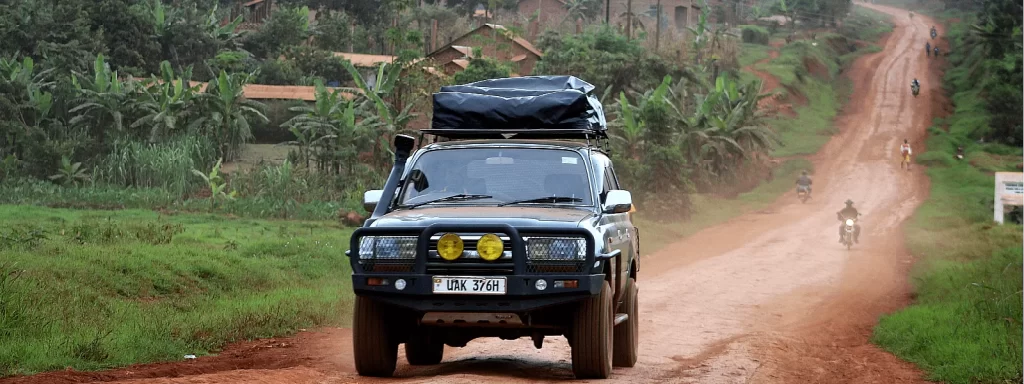
This is exactly why most driver-guided safari quotes bundle fuel into the daily vehicle rate rather than itemizing it: it removes the guesswork and protects you from mid-trip price swings.
Why This Varies More Than You’d Expect
- Vehicle type. A larger, older Land Cruiser or an extended safari vehicle will burn noticeably more fuel than a compact SUV, but often makes up for it in reliability and comfort on rough roads.
- Road surface. Murram and gravel park roads consume more fuel than tarmac, sometimes significantly so once you factor in low-gear driving and frequent stops for wildlife.
- Game drive distance. Internal park driving adds up fast — a single day chasing sightings across Queen Elizabeth or Murchison Falls can easily add 100+ kilometers that aren’t part of your point-to-point route.
- Detours and stops. Side trips to places like Ziwa Rhino Sanctuary or Budongo Forest add real distance, even if they’re worth every extra litre.
- Fuel price swings. Because Uganda’s fuel market is deregulated, the same route can cost noticeably more or less depending on when you travel.
Budgeting Tips
- If your driver-guide quote doesn’t already include fuel, ask directly rather than assuming — bundled and unbundled pricing are both common.
- Build in a buffer above your calculated estimate; game drives, detours, and price fluctuations almost always push actual costs above a straight-line distance calculation.
- For self-drive travelers, carry extra fuel on remote routes like the approach to Kidepo Valley, where stations thin out considerably and running low isn’t a minor inconvenience.
- Ask your rental or tour operator whether fuel is quoted as a flat allowance or billed on actual consumption — this materially changes how much flexibility you have to detour or add extra game-drive time.
Final Thoughts
Fuel won’t be the biggest line item on a Uganda safari budget — permits and accommodation usually dwarf it — but it’s rarely as small as travelers expect once park driving and detours are factored in. Budgeting realistically for it, and confirming upfront whether your quote already includes it, is a simple step that saves you from an unwelcome surprise partway through the trip.
panning to self drive Uganda and would love to rent a car online- simply contact us now by sending an email to info@ugandacarrentaldeal.com or calling us now on +256-779232316.