Navigating Uganda rental car upgrade options can feel overwhelming. Rental companies present a menu of add-ons, each promising to enhance your journey, but which ones actually deliver value? After extensive experience traversing Uganda’s varied landscapes—from the paved highways connecting major cities to the rugged trails leading to remote national parks—certain upgrades consistently prove their worth while others simply pad rental companies’ profits.
Upgraded Vehicle Class: When Basic Won’t Cut It
The jump from economy sedan to mid-size SUV represents one of the most consequential upgrade decisions you’ll make. In Uganda, this isn’t about comfort preference—it’s about capability and safety. The country’s infrastructure varies dramatically: smooth tarmac in Kampala transitions to potholed rural roads, then to seasonal tracks that challenge even experienced drivers.
A standard sedan might cost $40-50 daily while an SUV runs $70-90, but this $20-40 difference buys you ground clearance that prevents undercarriage damage on rough roads, stronger suspension to handle weight and terrain, and confidence navigating flooded sections during rainy season. If your itinerary ventures beyond major urban centers or includes any national park visits, this upgrade stops being optional and becomes fundamental trip insurance.
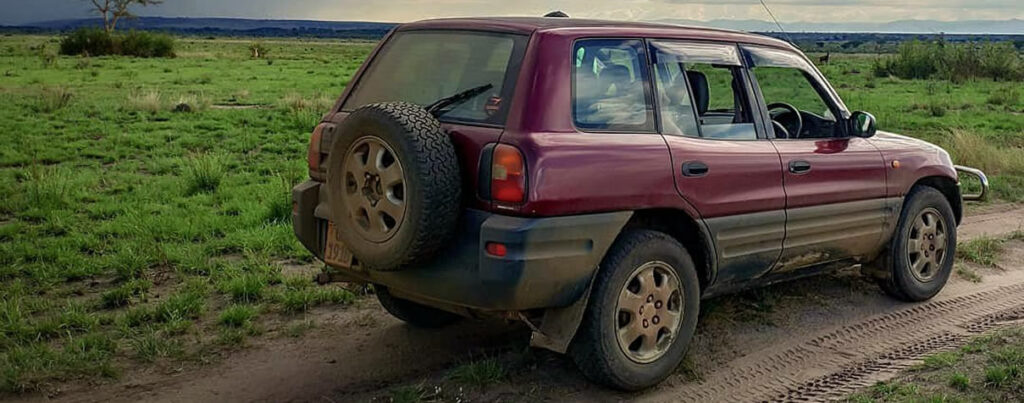
The sweet spot for most travelers is a mid-range SUV like a RAV4 or similar crossover. You gain essential capability without the fuel consumption and cost of heavy-duty Land Cruisers, which are really only necessary for the most challenging destinations like Kidepo Valley or deep into Bwindi’s mountain roads during heavy rains.
Enhanced Insurance Coverage: Your Financial Safety Net
Uganda’s rental insurance landscape differs significantly from Western norms. Basic packages typically include minimal coverage with excesses (deductibles) of $1,000-2,000, leaving you financially vulnerable. Upgrading to comprehensive coverage with reduced or zero excess adds $15-30 daily but fundamentally changes your risk exposure.
Consider the real-world scenarios: a collision with one of the many overloaded trucks sharing the roads, hitting an unavoidable pothole that damages multiple components, or encountering one of the free-roaming cattle that appear suddenly on rural highways. Any of these incidents could generate repair bills exceeding $1,500. Over a ten-day rental, comprehensive insurance costs $150-300—substantially less than a single incident’s potential cost.
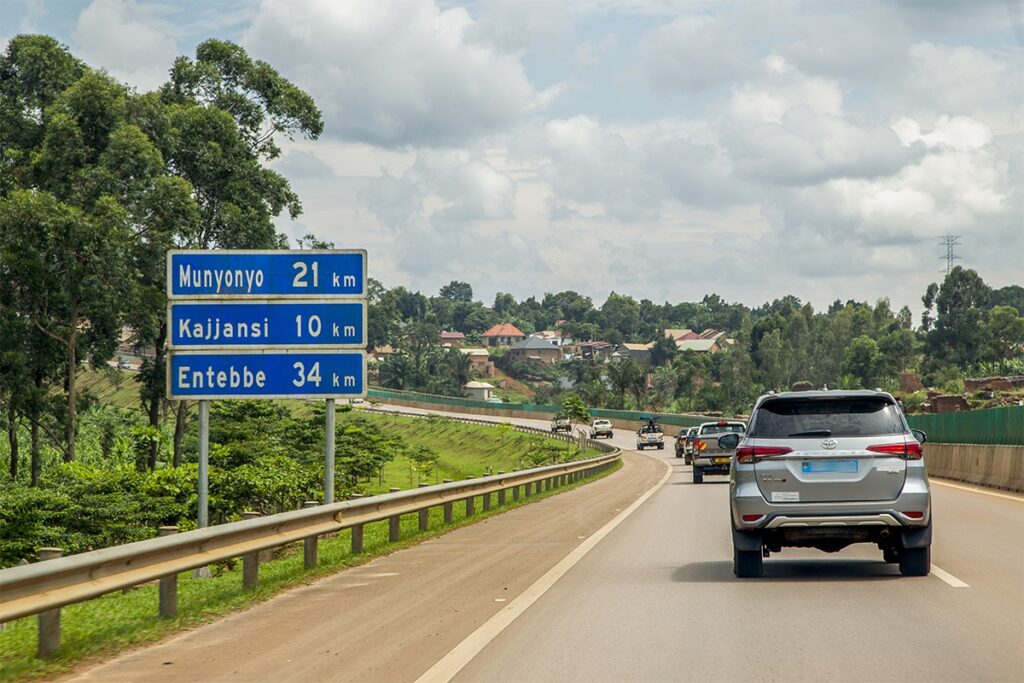
The psychological benefit matters too. You’ll drive more confidently knowing that an unexpected mishap won’t devastate your travel budget. This mental freedom allows you to focus on Uganda’s spectacular scenery rather than obsessing over every road hazard. For nervous drivers or those unfamiliar with local conditions, this peace of mind alone justifies the upgrade cost.
Extra Spare Tire: Redundancy That Saves Days
Most rental vehicles come with one spare tire. Upgrading to include a second spare typically costs $8-15 daily and ranks among the smartest investments for trips beyond major cities. Uganda’s roads are notoriously hard on tires—sharp volcanic rocks, aggressive thorns from roadside vegetation, and debris from poorly maintained surfaces create puncture risks that shock first-time visitors.
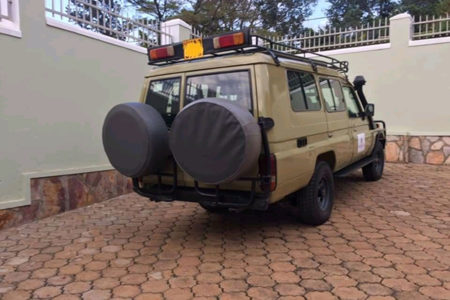
The mathematics are compelling: getting one flat tire is inconvenient but manageable. Getting a second flat before you’ve repaired the first can strand you for hours or even days in remote areas. Tire repair services exist throughout Uganda, but in places like Murchison Falls or Queen Elizabeth National Park, reaching a repair shop might require hours of driving on dirt roads—impossible with two flat tires.
This upgrade proves especially critical during rainy seasons when mud conceals sharp hazards and for travelers visiting multiple parks in one trip, increasing cumulative puncture risk. The small daily cost provides disproportionate value relative to the catastrophic inconvenience of being stranded with no transportation options.
Roof Top Tent: Transforming Accommodation Economics
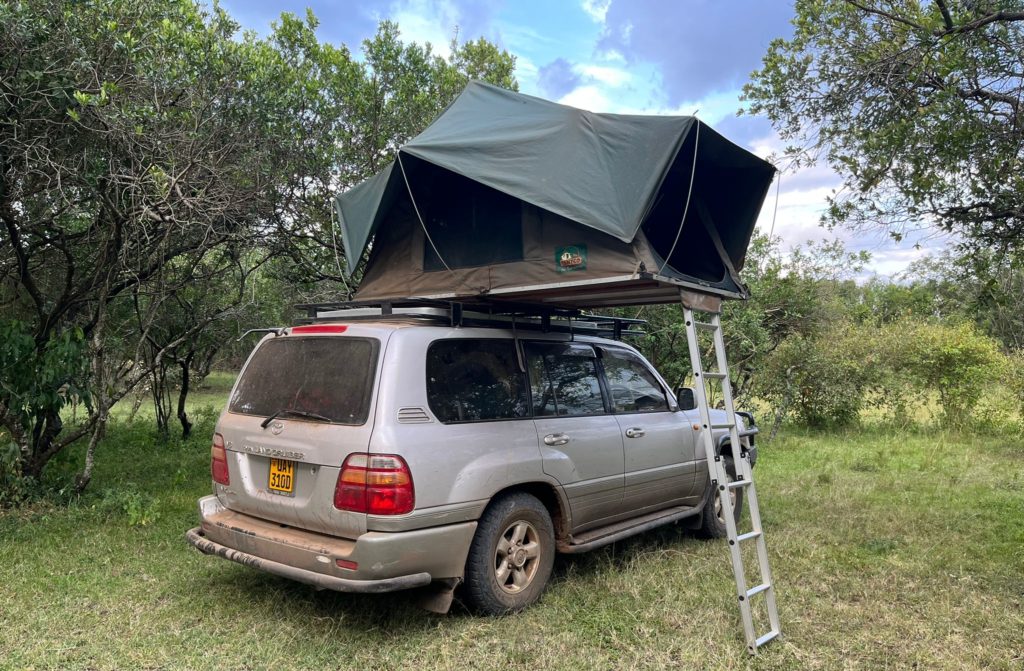
For adventurous travelers planning extensive park visits, upgrading to a vehicle with a roof-top tent changes the entire trip equation. This addition costs $30-50 daily but potentially saves $100-200 per night on lodge accommodations, while offering intimate wildlife experiences impossible from traditional lodging.
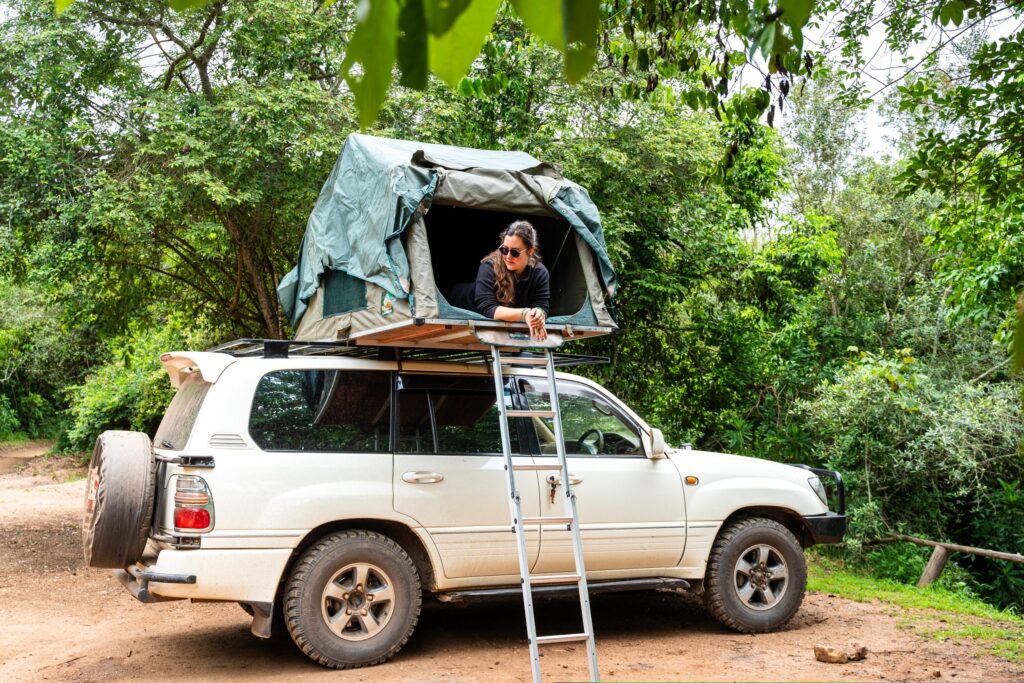
Uganda’s national parks have designated camping areas with basic facilities where roof-top tent camping is permitted. You’ll fall asleep to the sounds of lions roaring, hippos grunting, and the African night chorus—experiences that luxury lodges can’t replicate despite their five-star amenities. Morning coffee at sunrise, watching elephants pass your campsite, creates memories worth far more than the upgrade fee.
The practical benefits extend beyond romance: flexibility in your schedule (no fixed lodge check-in times), reduced total trip costs for longer safaris, and the ability to stay within parks rather than commuting from distant accommodation. Some operators include camping equipment like chairs, cooking gear, and bedding as part of the roof-tent package, further enhancing value.
To unlock the true Pearl of Africa, you can rent a rooftop tent vehicle in Uganda for the ultimate self-drive safari freedom, complete with a secure, elevated view every night.
Satellite Communication Device: Lifeline for Remote Travel
Uganda’s mobile network coverage is excellent in cities and along major routes but dissolves rapidly in remote areas. If your itinerary includes destinations like Kidepo Valley National Park, the Rwenzori Mountains, or extensive time in Uganda’s northeastern regions, upgrading to include a satellite phone or emergency beacon ($20-35 daily) provides critical safety infrastructure.
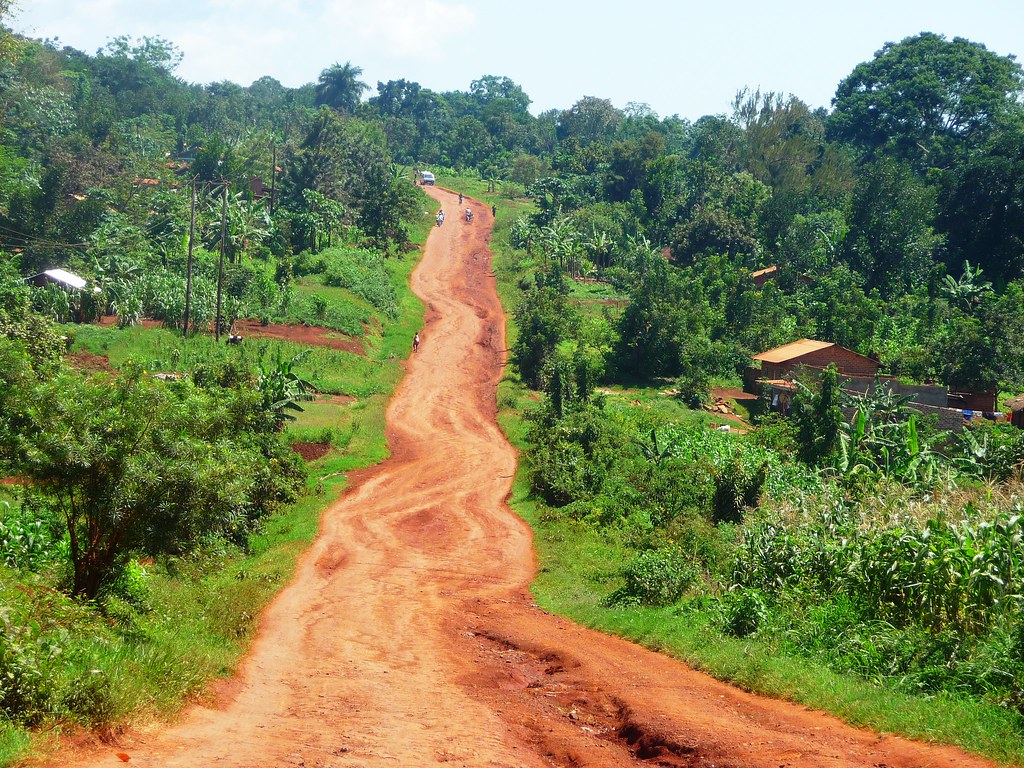
This upgrade addresses worst-case scenarios: medical emergencies requiring evacuation, serious vehicle breakdowns beyond roadside repair capability, or unexpected security situations. In areas where the nearest assistance could be six or more hours away by vehicle, satellite communication transforms a potential tragedy into a manageable crisis.
Most travelers won’t need this technology, but for those venturing genuinely off-grid, it represents prudent risk management rather than paranoid over-preparation. Consider your specific itinerary, group composition (traveling with children or elderly companions increases stakes), and personal risk tolerance when deciding.
What Doesn’t Deserve Your Money
Skip GPS unit rentals—smartphone apps with downloaded offline maps work better and cost nothing. Decline expensive audio system upgrades that add no functional value. Avoid pre-purchased fuel packages that lock you into disadvantageous rates. Child safety seats can often be sourced locally for less than multi-day rental fees.
The pattern is clear: invest in upgrades that enhance safety, capability, and access to experiences impossible without them. Decline those that provide mere convenience or cosmetic improvement. Your Uganda adventure deserves genuine enhancement, not just expensive add-ons.
Planning to book a Uganda rental car with upgrades, we will be more than delighted to offer you our services. Simply contact us now by sending an email to info@ugandacarrentaldeal.com or call us now on +256-779232316 to speak with the reservations team.